
Blog
Preparing Young Learners for School Through Stories and Songs
Jan
How storytelling builds readiness beyond academics
As children head back to school, families often focus on academic readiness—letters, numbers, and routines. While these skills matter, true school readiness goes far beyond worksheets and flashcards.
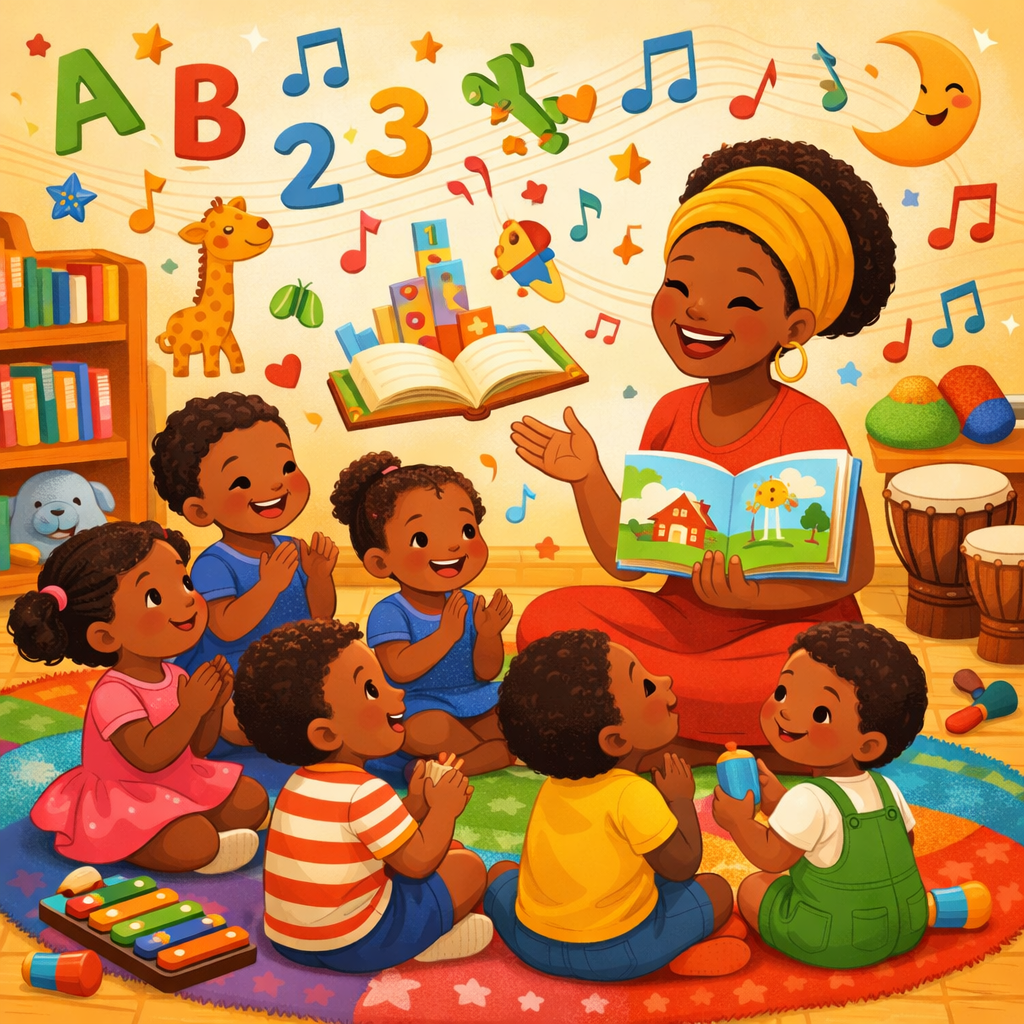
At Sankofa Stories and Nursery Rhymes, we believe that story and song are powerful tools for preparing young learners emotionally, socially, and culturally for the classroom.
Long before children sit at desks, they learn through listening, rhythm, repetition, and connection. Storytelling and nursery rhymes rooted in African oral traditions support the whole child, helping children transition into school with confidence and joy.
School Readiness Is More Than ABCs
For young learners, starting school often brings excitement alongside uncertainty. New environments, unfamiliar faces, and structured routines can feel overwhelming. Story and song help children process these changes in gentle, familiar ways.
Through stories, children learn:
- How to listen and follow along
- How to understand emotions and situations
- How to see themselves reflected in positive ways
Through songs and nursery rhymes, children practice:
- Language and memory skills
- Rhythm and coordination
- Turn-taking and call-and-response
These experiences build the foundation for classroom success long before formal academics take center stage.
The Power of Storytelling in Early Learning
African-centered stories often emphasize community, respect, problem-solving, and perseverance—values that naturally support school readiness. When children hear stories about characters navigating challenges, listening to elders, or learning from mistakes, they internalize lessons that apply directly to school life.
Storytelling also strengthens attention span and comprehension. Sitting together to listen to a story mirrors classroom expectations while still feeling safe and nurturing.
Most importantly, culturally rooted stories help children enter school grounded in identity and pride, knowing their history and voices matter.
READ ALSO: 5 Ways to Get Your Kids to Like Mathematics
Why Song and Rhythm Matter
Nursery rhymes and songs are often a child’s first experience with structured language. The repetition and rhythm found in African nursery rhymes make learning feel natural and joyful rather than forced.
Songs can:
- Ease separation anxiety during school drop-off
- Help children remember routines and expectations
- Encourage participation, confidence, and self-expression
Call-and-response rhymes, in particular, prepare children for group learning by teaching them when to listen and when to respond—an essential classroom skill.
Simple Ways to Use Story and Song at Home
As the school year begins, families can easily incorporate storytelling and music into daily routines:
- Morning song rituals to start the day calmly
- Short stories before bedtime to talk about feelings and experiences
- Repetitive nursery rhymes during car rides or transitions
- Gentle discussion after stories, asking children what they noticed or learned
These moments don’t require extra time—just intention.
Preparing the Whole Child, the Sankofa Way
At Sankofa Stories and Nursery Rhymes, we honor the wisdom of the past while supporting the learners of today. By using story and song, we help children step into school not only prepared to learn, but prepared to belong—to their classroom, their community, and themselves.
As we move into a new school season, let us remember: when children are emotionally secure, culturally affirmed, and joyfully engaged, academic learning follows naturally.
Story and song are not extras. They are essentials.
