

Queen Nzinga of Ndongo and Matamba
Queen Nzinga, a wise and brave queen from Angola, fought against Portuguese colonizers to bring peace to her kingdom. She was a skilled diplomat and fierce warrior, leading her armies to defend her people. Discover how she became a powerful leader and heroine in this exciting tale of courage and determination.
Written and Read by Bunmi Oyinsan
Ilustrated by Claire I Ashinze
Animated by Ikenna Mgbejiofor
Queen Nzinga of Ndongo and Matamba
Once upon a time, in a country known as Ndongo, which is now part of Angola, in the continent of Africa, there was a princess named Nzinga. She was born when her father and her people faced difficult times because the Portuguese had invaded their land. Nzinga was wise and brave. She was as hardworking as she was talented. Her parents thought her a responsible girl. So, although it wasn’t customary to take girls on royal visits and battles in those far gone days, her father took her with him, anyway! He believed that she would benefit from these experiences. He also knew that she would grow up to become an influential leader in the kingdom. Nzinga’s father realized from when she was a little girl that she was destined to be a great leader because she showed signs of resourcefulness and intelligence.
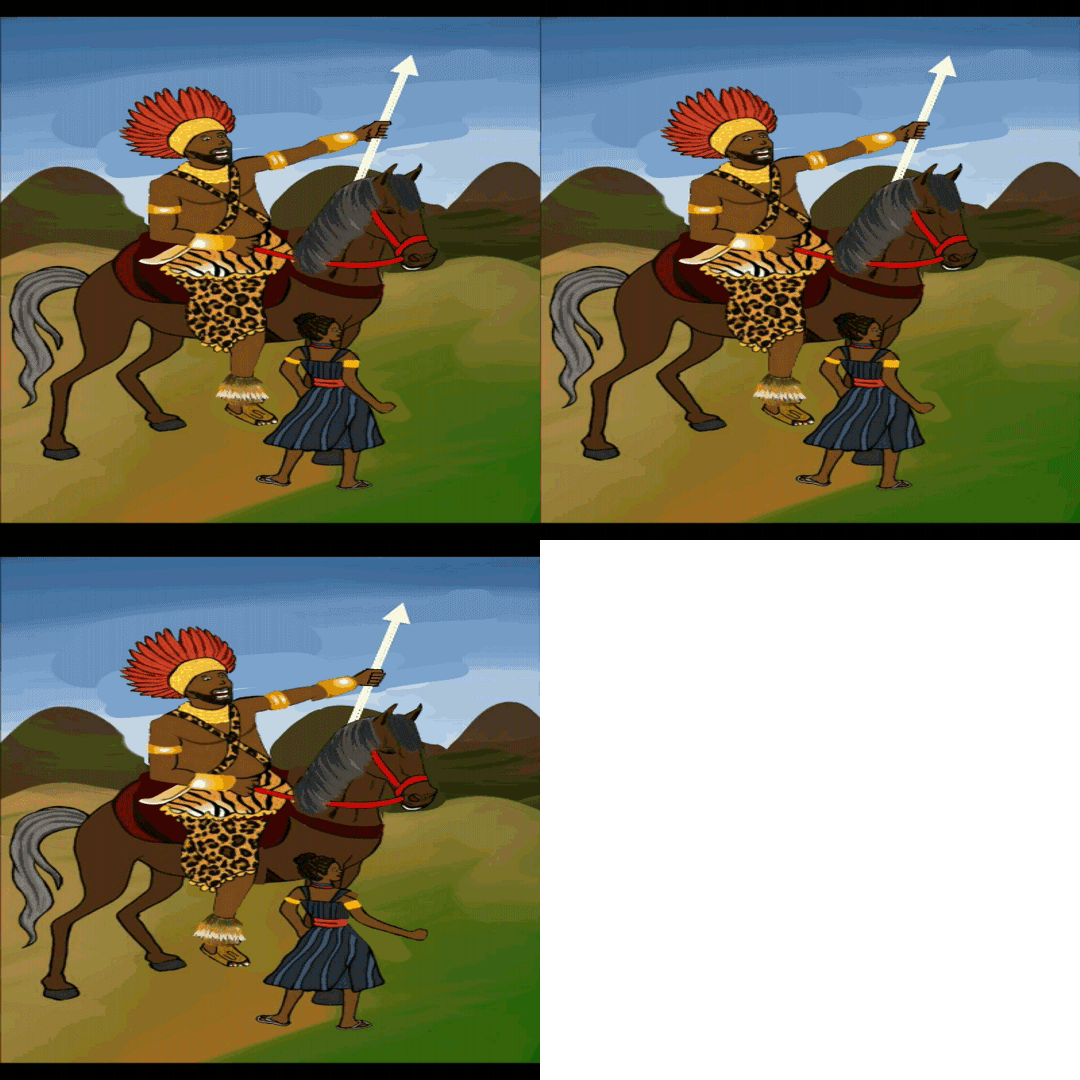
Nzinga loved her beautiful country, which had beautiful trees, plenty of natural resources and wildlife. She admired how most of the people of her country worked hard to fight against the Portuguese who came from Europe to colonize her land. She hated the pain and suffering that the Portuguese inflicted on her people. She loved her father very dearly and supported him every way she could. She was a loyal and patriotic princess. From a very early age, Princess Nzinga was determined to bring lasting peace to her kingdom and her people by freeing them from the Portuguese. She was proud of her people and domain and wanted to grow up to be a strong and responsible member of her community.
Nzinga knew that she would one day have to make crucial decisions as a princess. So, being the wise princess she was, she devoted herself to her studies and learned as much as possible. From a young age, she was resourceful and quick at her studies. She soon learned to speak, write and read in Portuguese, which her father made her study. Her father believed that it was essential to understand the colonizers’ language so as to know how to defeat them. Nzinga was a fast learner, and soon, she could speak, write and read Portuguese as well as any native-born Portuguese could.
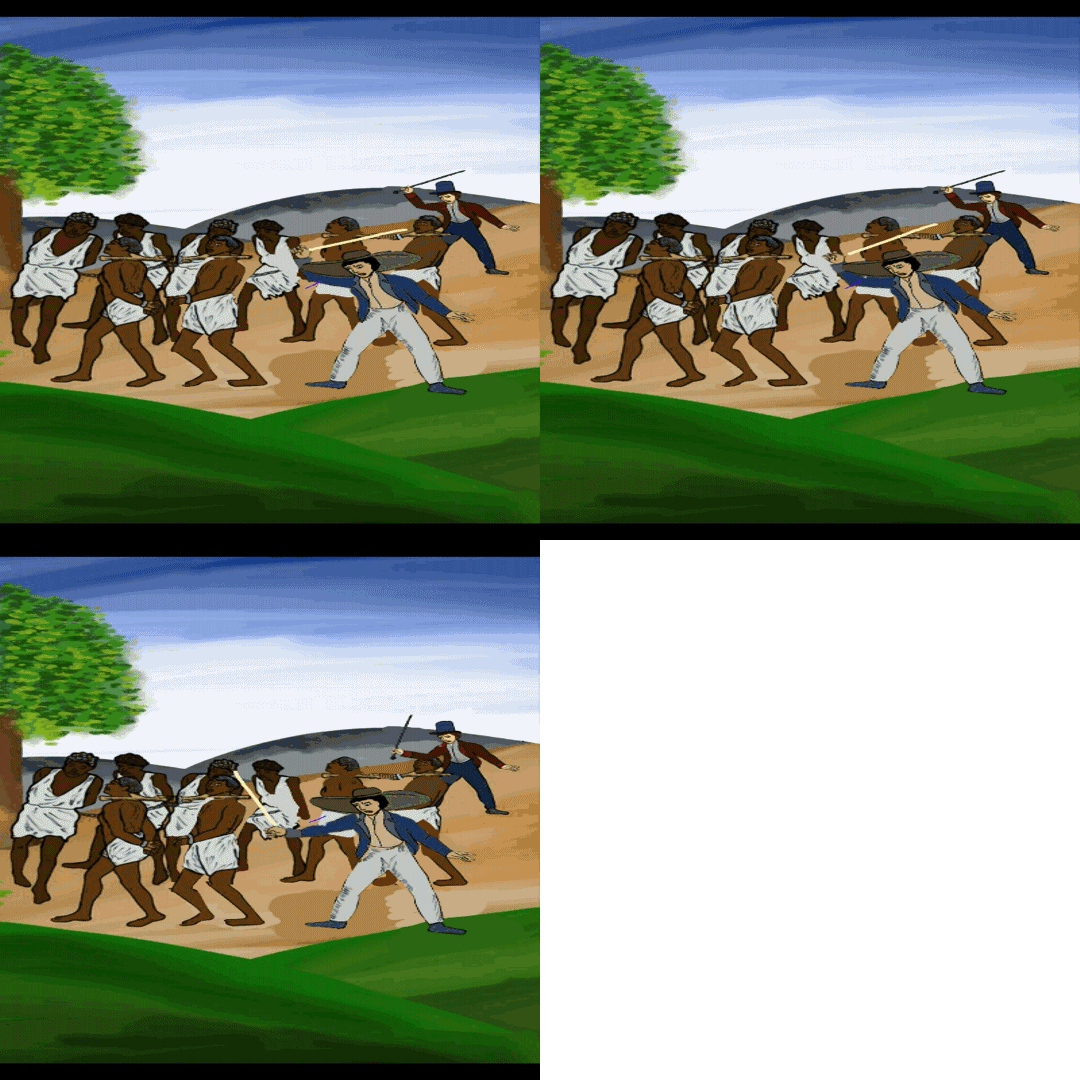
Nzinga grew with grace and wisdom. By the time she was a young woman, she was highly educated, talented and intelligent. Nzinga was a very farsighted personality. She performed her royal duties to the best of her abilities and continued to support her father in every way she could. Nzinga was humble and kind. She was never proud, vain or conceited. She knew that knowledge was the most priceless thing that a person could have. A person could have all the beauty and wealth in the world, but Nzinga knew that all that became useless without knowledge. She continued to strive to become as knowledgeable as possible. Nzinga grew in beauty and wisdom as she aged. Everyone who knew her recognized that she would be a great leader and prove to be an asset to her kingdom one day. Time went by, and Nzinga’s kingdom continued to struggle under the tyranny of the Portuguese. The Portuguese treated Nzinga’s people with much cruelty and disrespect. They ravaged their land, stole people and shipped them off to serve as slaves in Sao Tome, Europe and Brazil. The Portuguese made a lot of wealth through the slave trade, and they planned to keep the trade going for a long time. They used their ill-gotten wealth to develop their country.
Nzinga had an older half-brother called Ngola Mbandi. After the death of Nzinga’s father, Ngola became king. Nzinga and her half-brother were very different and did not get along well. After her brother became king, he also tried to stop the Portuguese from taking over more of their land. He continued the fight against the Portuguese. After a while, the Portuguese were eager to make peace with Nzinga’s brother so that they could go on with their slave trade without interruption. Nzinga’s brother, Ngola, knew that he needed the help of his intelligent sister if he was to negotiate for peace with the Portuguese. When he had to choose an emissary to go and negotiate peace with their enemies, the Portuguese, he chose Nzinga, knowing that no one was as wise as she was. No one was likely to do as well as she would. He knew that Nzinga would be the ideal person to represent him at the meeting to negotiate with the Portuguese because she understood and spoke their language flawlessly, and she knew their ways.
Nzinga saw that she had an important role to play. She understood that this would be a turning point in the history of her people and kingdom. Nzinga also recognized that the outcome of the negotiation rested solely in her hands. The responsibility was huge, but Nzinga refused to be crushed or daunted. She mustered every ounce of her courage and prepared to go and meet with the enemies. She realized that her nation and her people were all depending on how well she negotiated. It was going to be a turning point in the history of her kingdom and people. She was determined to make it work for her people and her kingdom. The future of everyone who lived in her kingdom rested upon her shoulders.
She travelled for many hours all day long through dark forests and rough roads. She was accompanied by two of her royal aides who had been her companions since she was young. It was an arduous journey, but she was determined to get there. As she travelled through the country to Luanda, which was the venue of the meeting with the Portuguese, the journey was made even more unpleasant for her when she saw the pain in the eyes of her people who were suffering under the claws of the unmerciful Portuguese invaders, who, like parasites, were sucking the very life out of her kingdom. Something stirred in Nizinga. Tired though she was, then and there, she made up her mind to make things better for her people. She made up her mind to do everything in her power to bring about a better tomorrow for her people.
After a long journey, she entered the room where the negotiation was to take place. Nzinga was brimming with confidence and resolve to lighten her people’s burden by making the best of this opportunity. She held her breath and waited for her chance. The Portuguese governor strode arrogantly in and greeted her condescendingly. Nzinga responded but noticed how inhospitable he was when he sat down on the only chair in the room and gestured to her to sit on a mat that had been laid out for her. Nzinga’s people treated all visitors with much hospitality, but this governor was determined to intimidate Nzinga.
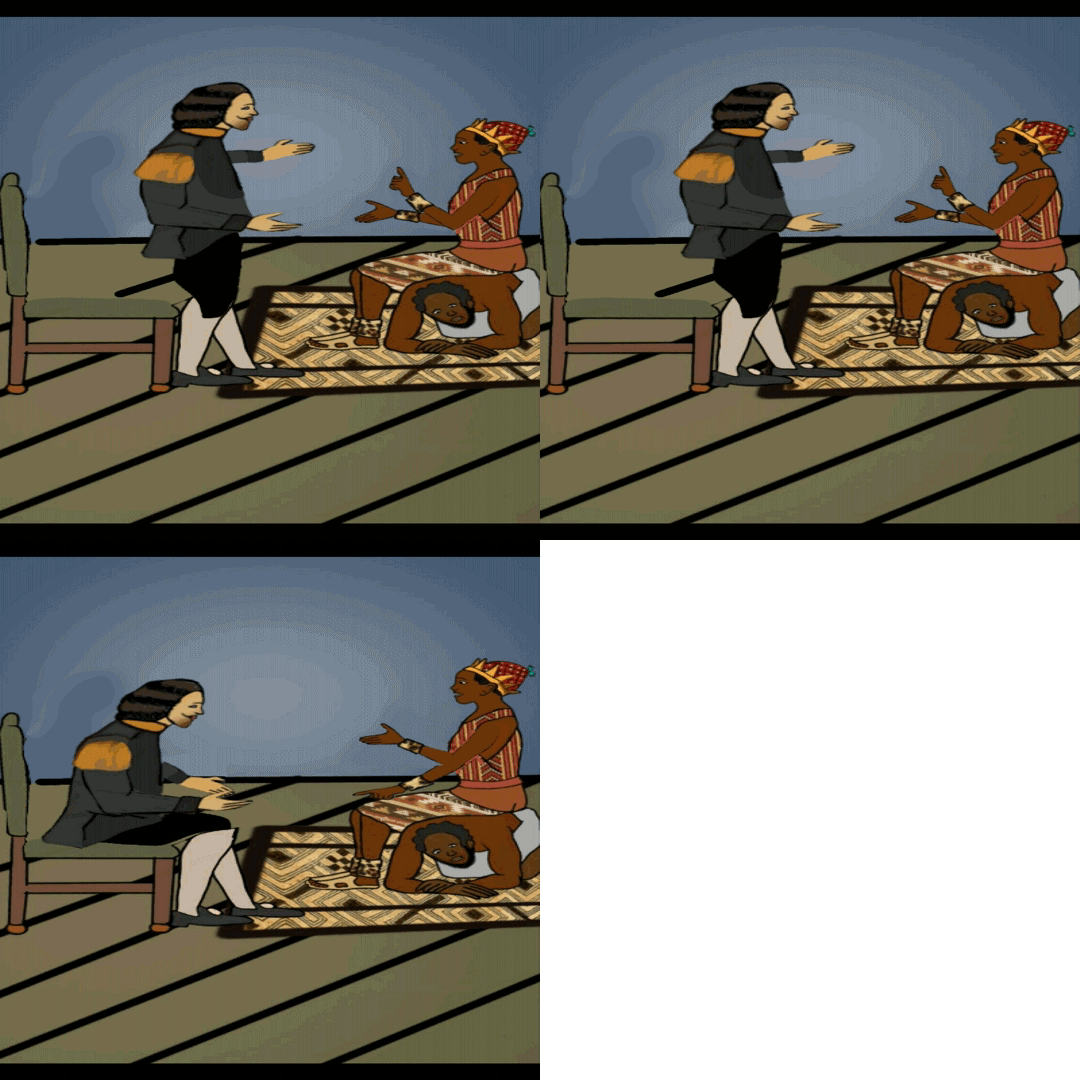
He, however, underestimated Nzinga. “So, it is a battle of wits! Bring it on!” she thought to herself as she turned to look at her royal aids who accompanied her to the meeting. They, too, had noticed how shabbily the Portuguese governor was trying to treat their princess. One of them quickly crouched down before her. She adjusted her dress and sat on him as if he was a regular chair! The governor was dumbfounded. He became flustered when he realized that he had clearly underestimated this African beauty! She had brains as well as beauty.
He now felt foolish facing Nzinga, who sat regally in front of him. Her strength, wit and courage clearly reflected by the way she looked at him. He had thought that she would sit on the floor, where he would be able to talk down at her and therefore bully her into agreeing to his terms.
From that moment and throughout the negotiations, the governor was awed by Nzinga’s wisdom, audacity and courage. He quickly realized that he was no match for Nzinga. She did not only stand her ground, but she very quickly took the upper hand. The negotiations ended with Nzinga winning the most favourable terms for her people!
Nzinga felt pleased with herself, but she did not let it get to her head because she was wise! She had won a great battle for her people and her kingdom that day, but she knew that the war was far from over. Nzinga departed as gracefully as a lioness while the governor watched her leave. He was baffled and dumbstruck by everything that had happened that day.
Nzinga did not stop there. She was diplomatic, savvy and pragmatic, so she became baptized and embraced Christianity. She even took up the name Dona Ana de Sousa. Despite this conversion, deep down, she was loyal to her country, her kingdom and her people. However, the Portuguese did not want lasting peace and went back on the agreement. They resumed their onslaught against Nzinga’s people and her kingdom.
The Portuguese managed to drive Nzinga’s brother out of his kingdom. After his untimely death, Nzinga was crowned queen of the domain by her people. She remained brave, wise and strategic and extended her authority over local chieftains to unite them against their common enemy, the Portuguese.
Nzinga even managed to extend her authority over the Neighbouring kingdom of Matamba, which then came under her rule. She ruled with wisdom, and the kingdom prospered under her reign. She reigned for forty years, and during her long and prosperous reign, she ruled over both the kingdoms of Ndongo and Matamba. Nzinga fought valiantly, led her people in several battles against Portuguese attacks, and won victory after victory for her people. She managed to keep her kingdom protected against every attempt of the Portuguese to colonize her people.

Nzinga was so powerful that the king of Portugal, Pedro VI, had to renounce all the claims Portugal held on Ndongo in a treaty that was ratified in Lisbon in 1657. Nzinga died at the ripe old age of 82. Her people mourned her because she was one of the most outstanding leaders they had ever seen. Long after her death, her people kept telling stories about her bravery and wit, inspiring many great Africans who followed in her footsteps long after she was gone. She continues to encourage people to this very day.
Related products

Biographies
