

Kolibri: The Little Hummingbird Who Could


Kolibri, the hummingbird’s home is a beautiful and lush forest. But a fire threatens to destroy her precious home. With courage and quick thinking, Kolibri takes the lead to preserve the forest. But can she make it in time? Follow this heart-warming tale filled with excitement, beauty, and a valuable lesson about the importance of protecting our environment.
Retold by Bunmi Oyinsan
Illustrated by Anastasia Mayer
Read by Bunmi Oyinsan
Animated by Ikenna Mgbejiofor
Kolibri: The Little Hummingbird Who Could
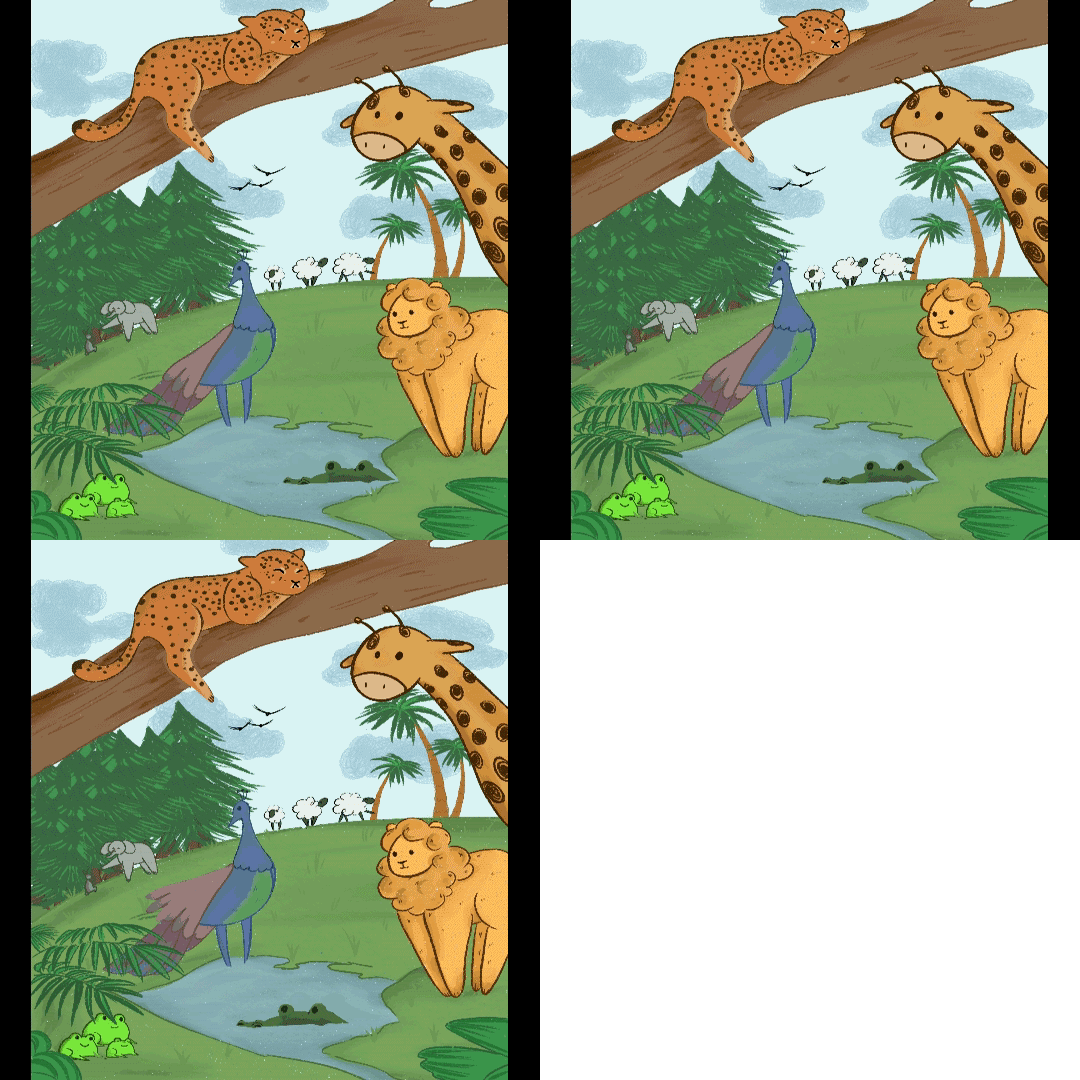
Once upon a time on this planet. There was a forest where many kinds of animals lived. There were elephants with huge trunks. There were giraffes that were taller than very tall trees. There were ponds in the forest with plenty of fishes. There were toads and frogs around the ponds. There were rivers and streams with hippos and crocodiles.
Lions, cheetahs, panthers, impalas, jackals, zebra, antelopes all flourished in this forest. There were monkeys and baboons. Porcupines and otters. There were various kinds of animals, too numerous to name here, who made their home in this lush forest. Many varieties of birds lived in that forest too. Some lived in the tall leafy trees. Others who could not fly lived happily in the grassy areas of the forest floors.
If you asked the animals, fishes or birds about the forest, they would tell you that it was the best place anywhere on earth or any other planet to live. The forest was long and wide enough to provide for all their needs. Unfortunately, human beings soon realized how rich the forest was. They started going there to cut down the tall trees to build houses and furniture. They even used some to make paper for writing, but they did not plant any trees to replace the ones that they cut.
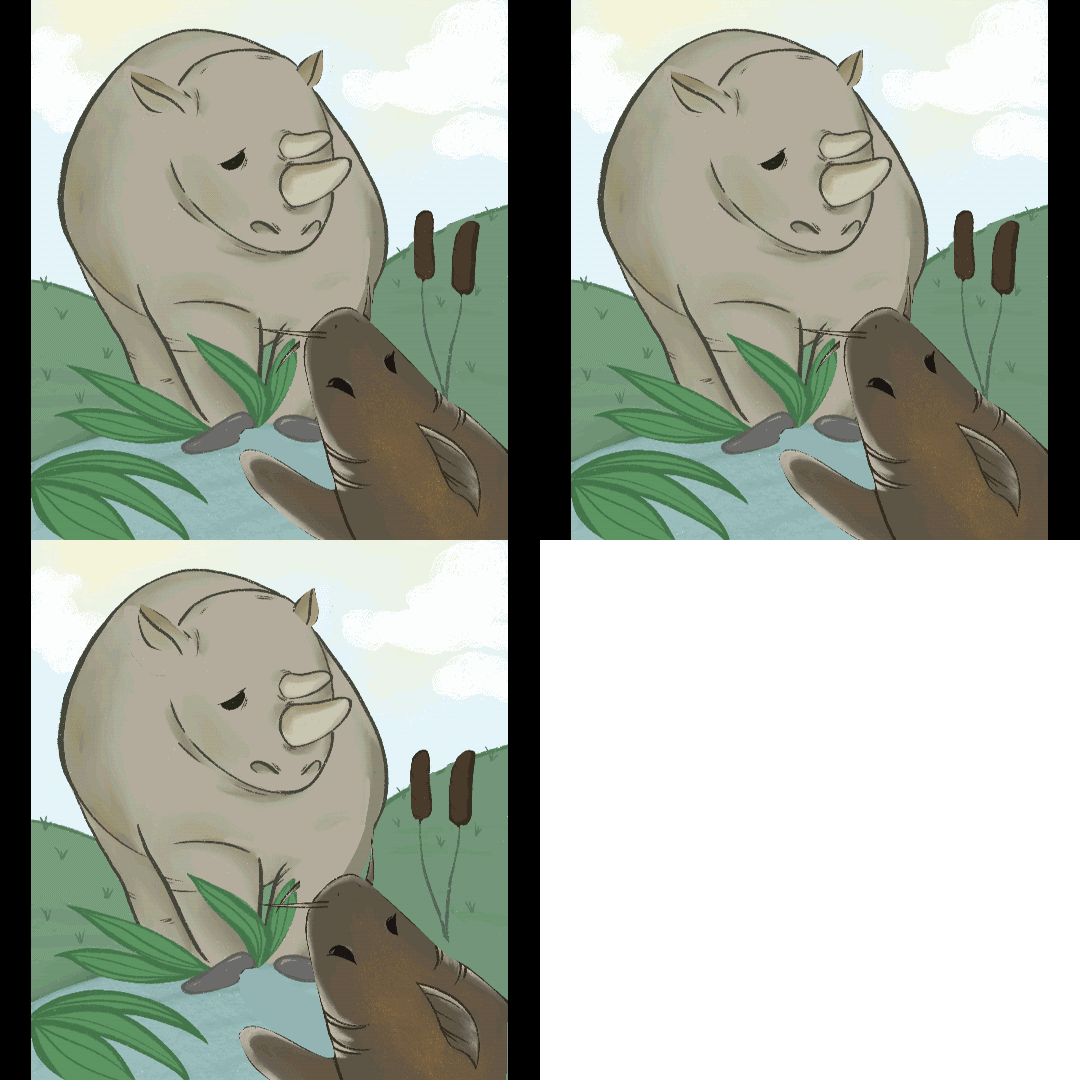
One day, the animals woke up and found that the weather in the forest was hotter than any of them could remember. It was Obokun, the catfish, who first noticed how hot the day was because the water in her end of the stream was somewhat warmer than usual.
“Hey, Mr. Rhino, she called out to the neighbourly Rhinoceros. How does the water feel down your end?
“I was just wondering too. It feels rather warm.” Rhino replied.
“Warmer than I can remember it ever being,” added Crocodile, who was making his way back into the water after going to have a quiet lay down on the bank of the water. “I think it’s a generally hot day,” he added. “The sun is scorching. I did not enjoy laying on the river bank today.”
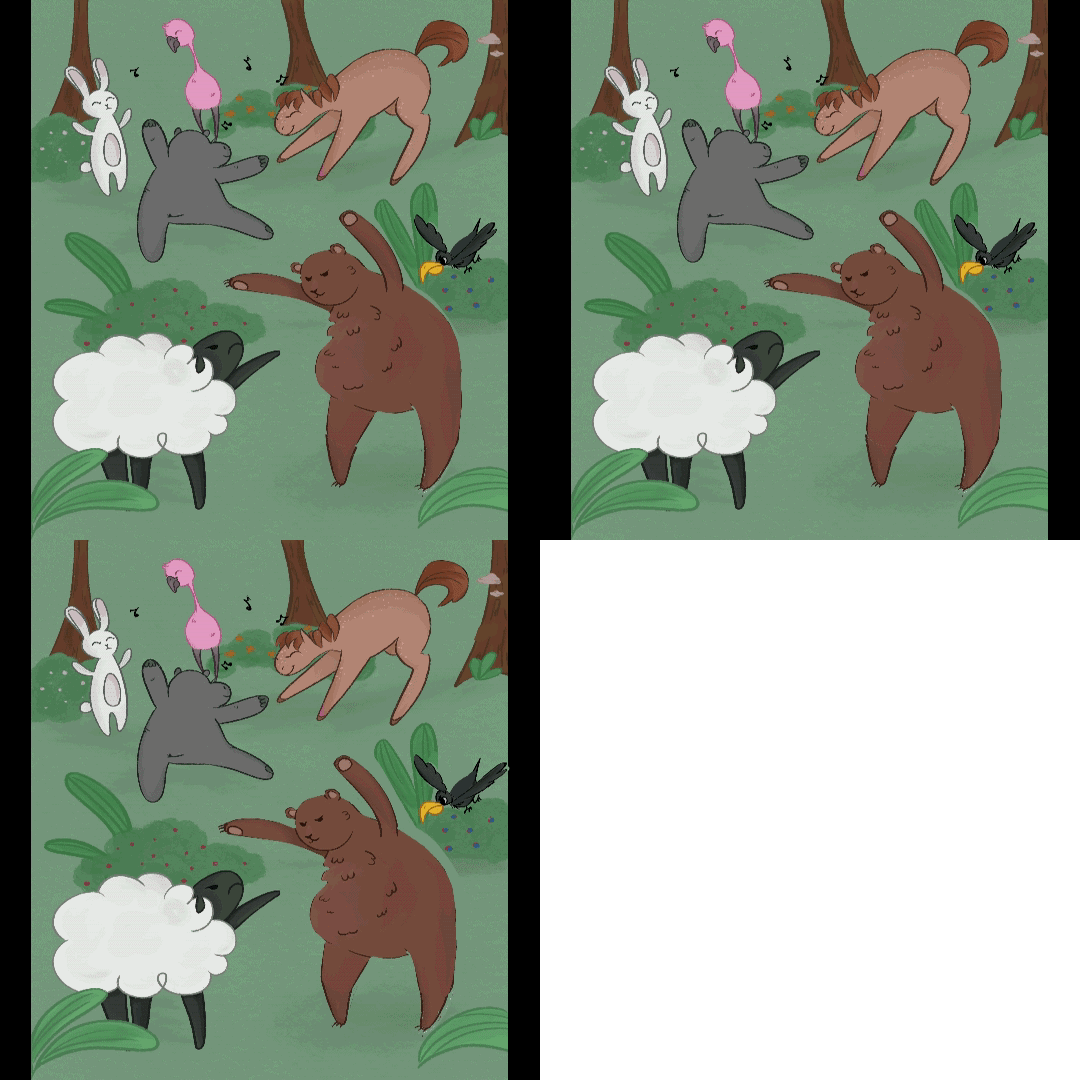
“Well, I expect it will soon rain,” said Mrs. Elephant, who was taking her children for an early morning stroll.
None of the animals worried much. The forest had always taken care of them, and they could not imagine that anything could go wrong in their beautiful home. All the animals went about their way, hoping that the rain would soon fall. If the rain fell as it was expected to do, the forest would no longer be so hot.
They waited one day, which turned into a week. They waited another week, which soon turned into a month. The forest kept getting hotter with each day that passed without rainfall. Then the months turned into a year, but still, the rain did not fall. So, the animals decided to call a meeting. All the heads of the various animal families were there. The meeting went on for hours because the animals could not agree on what to do to bring back the rain. Some animals said they could all organize a nice rain dance. If they all danced, maybe the rain would fall. Others thought a wrestling match between various animal groups would do the trick.
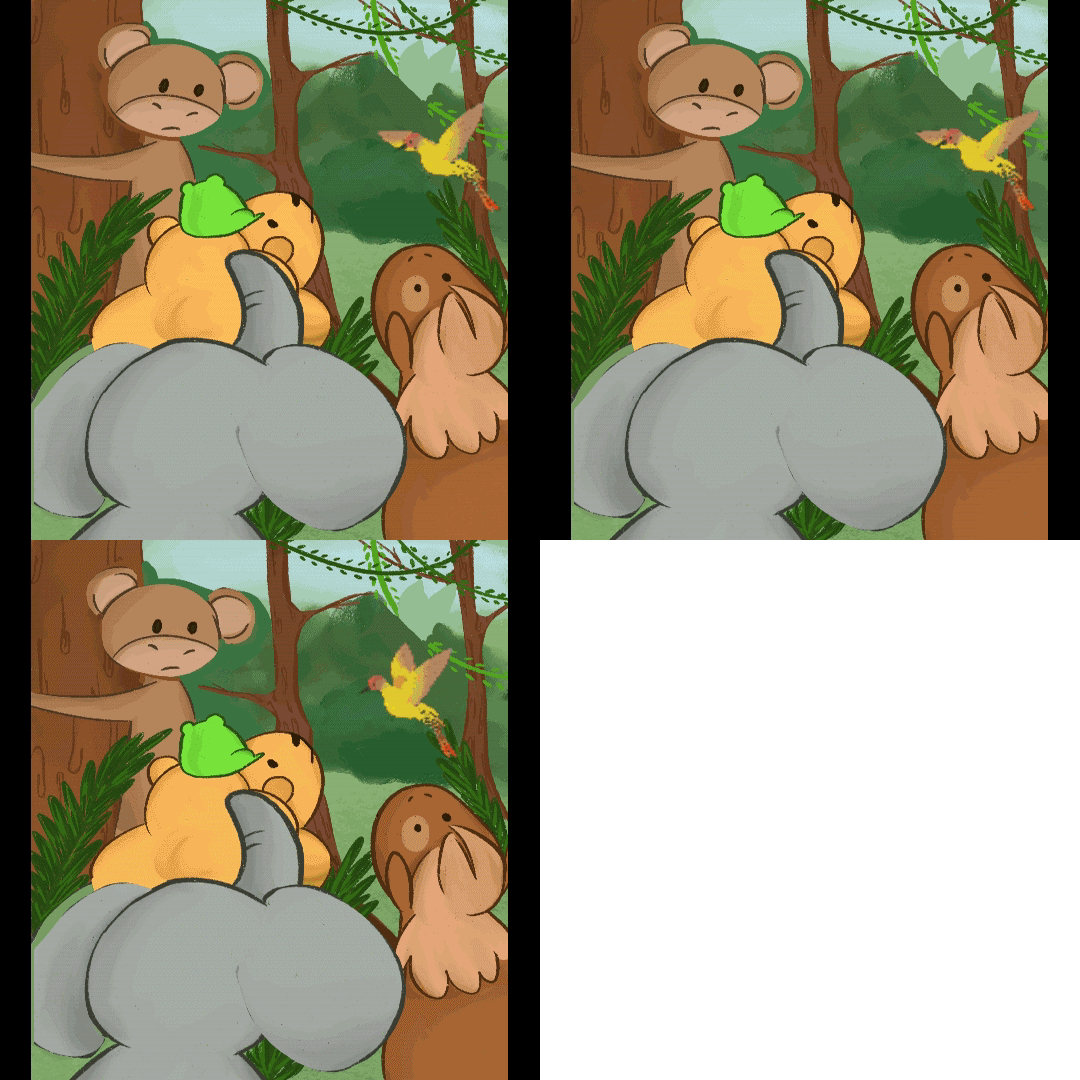
Different animals kept suggesting things that they would enjoy doing instead of thinking seriously about what could be done to save the forest from the overwhelming heat.
“I have an idea!’ A tiny voice shouted, hovering forward and backward, trying to be heard above the noise made by the raucous voices of Mr. Lion and Mrs. Elephant, who were arguing about whether a race to find the fastest runner or a rumbling competition to find the loudest trumpeter would be most effective to bring the rain down.
“Listen up, everybody!” The tiny voice said again. It was the voice of Kolibri, the little hummingbird. Her wings were beating very fast so that they made a humming sound which she hoped would silence the noise of her neighbours. She was flying forward and backwards, hovering up and down, turning round and round as she flew from one group of animals to another.
At last, they were all forced to pay attention.
“Phew! Thank you!” She said as she slowed her wings down a few beats.
“Why don’t I go and ask Nanvula, the rain goddess, for help?”
“Rain goddess?” What use has she ever been to us?” Sniggered the Mr. Frog in his croaky voice.
“Ha ha ha!” Laughed Kookaburra, the Laughing Jackass. “Nanvula doesn’t care. If she did, she would not have held back the rains for so many months. The Laughing Jackass said.
“I think it’s worth a try.” Kollibri insisted.
“What will you say to her?” Asked Ajapa, the tortoise.
“I don’t know. I guess I’ll first ask why she has held back the rains.”
The animals argued back and forth for a few more minutes, but they all agreed that sending Kollibri to the Nanvula could not do any harm,
So away flew Kollibri. She knew she had a long way to go to get to Nanvula, the Rain Goddess who lived over seven hills and valleys, which lay across a very wide ocean. That first day, Kollibri flew almost five hundred kilometres before stopping to rest. She stopped on the bank of a river where she knew that Oya, the beautiful Goddess of the river who was good friends with Nanvula, lived.
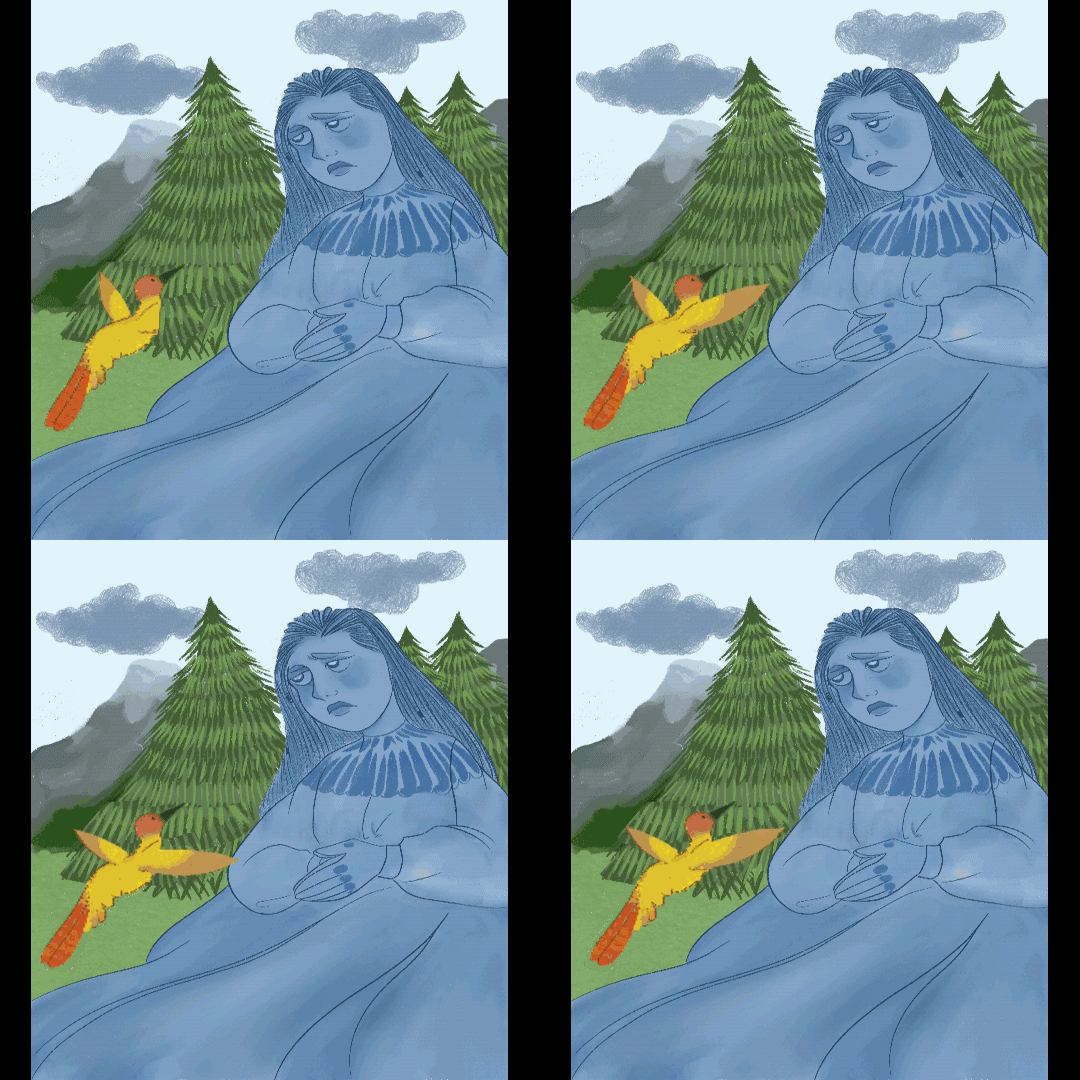
Suddenly, the river rose up. It was Oya who rose like a tower of water. Her eyes were shiny, and she smiled.
Oya was happy to see the little hummingbird, and she listened to what she had to say about her mission to Nanvula, the rain goddess. Then Oya told her that the last time she saw Nanvula, the Rain Goddess had looked really sad, as if there was something heavy weighing on her mind.
“Did she tell you what made her so sad?” Kollibri asked.
“She didn’t,” replied Oya, who now looked very sad too. She pointed Kolibri to a nice comfortable spot to sit by the bank of the river. She then gave her a nice bowl of bugs and nectar to eat. Kollibri was grateful because she had not stopped to eat since she left the forest. Kolibri slept very soundly and set off very early the next morning.
“Good luck, little hummingbird. Say hi to Nanvula and tell her not to be such a stranger.” Oya bade her farewell, still looking unhappy.
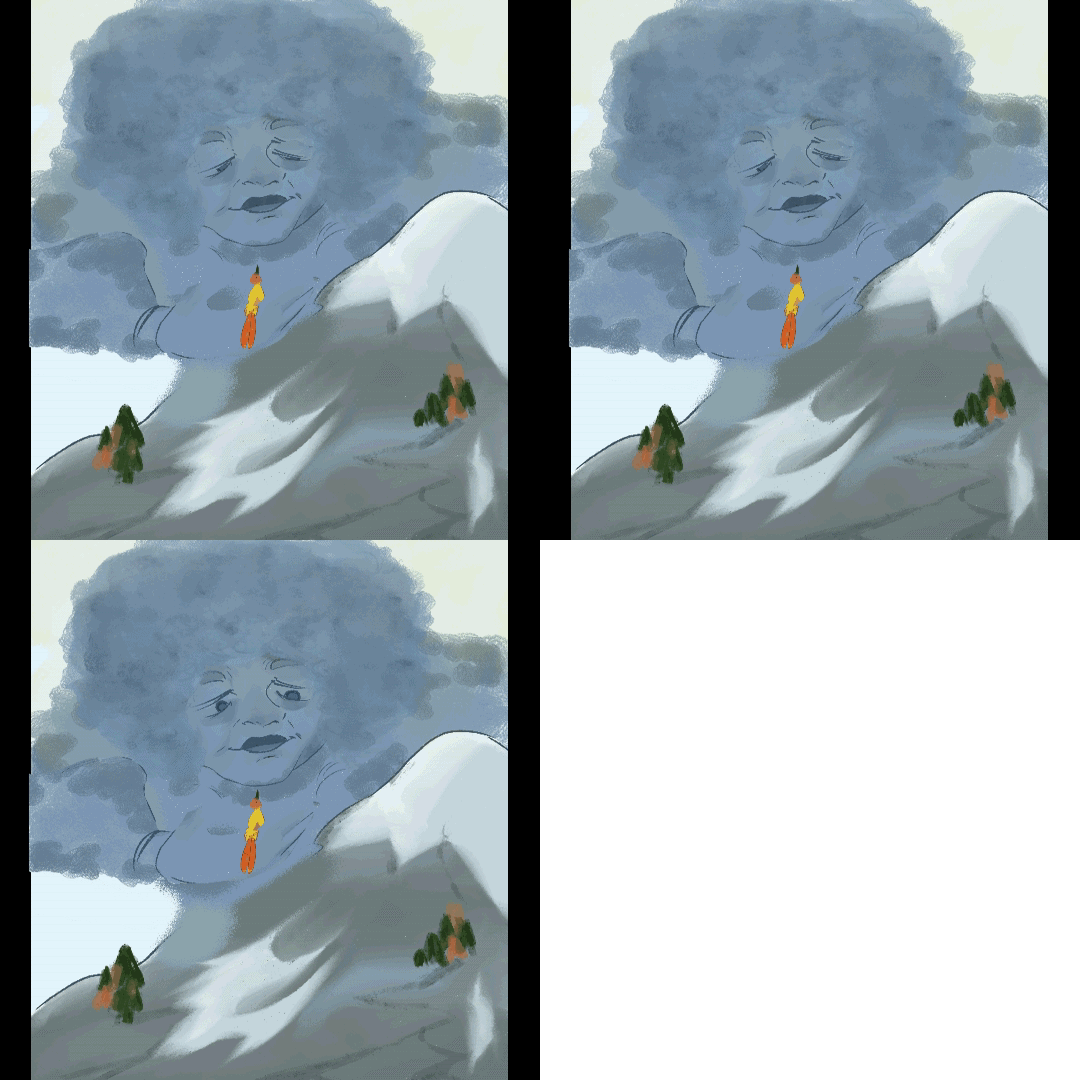
Kollibri’s journey took her three and a half more days to get Nanvula, who lived very high on top of a range of mountains. Nanvula appeared like a large dark cloud with the face of an old woman. The mountains around her were surrounded by lush trees and other vegetation. Nanvula was huge, like a large cloud, heavy with rain. She formed a crown on top of the mountains.
That first night when Kollibri arrived, Nanvula welcomed her. Like Oya, Nanvula was also very hospitable. She fed the little resourceful bird and gave her a very comfortable spot on a low-hanging tree to perch for the night.
“Rest, little one,” the Rain goddess said. You can tell me what brought you here in the morning.”
Although Kollibri was very tired and grateful for Nanvula’s hospitality, she was anxious to fulfil her mission.
“Thank you very much, Mama Nanvula, but I’ve flown over hills and valleys and across a mighty ocean on a very important mission. I will not rest well if I do not have your ears tonight.”
Nanvula smiled, and there was a low rumble as if it was about to start raining.
“Little Kollibri, my beautiful hummingbird, I know why you have come, but there’s nothing I can do to help you.”
“But, you are the Goddess of Rain, we have not had any rainfall for many months, and our forest will be destroyed if you don’t make it rain over it.
Nanvula blinked her eyes, and she looked at the Kollibri through sorrowful eyes.
“Why would I hold back the rains when I know how much depends on it?”
“But I don’t understand. Does it not rain when you ask it to? Does the rain not stop falling when you tell it to stop?”
“Child, I am rain. I’m happiest when I fall and make the earth fertile and fruitful. I’m sad when my clouds are big and heavy but cannot fall to water the earth or refill the oceans, rivers, and streams.”
“So why has it not rained on our forest for so long? Why has the sun been so hot that the forest is almost scorched?”
“You ask so many questions, little hummingbird, but the answers to your questions are beyond me. You must look to the humans, who cut down trees and treat mother earth with disrespect.”
Kollibri looked into the watery eyes of Nanvula, the rain goddess and saw how sad she was. Kollibri could see that she was telling the truth.
“But what is to be the solution. Streams are drying out in our forest. Trees are shrivelling before our eyes. The grass is no longer green.” Kolibri was really worried.
“The answer is never too far from the problem.” Said Nanvula.
Kollibri thought for a minute about what Nanvula just said, then cocked her head to one side.
“Is that some kind of a riddle?” Kollibri tried not to sound frustrated when she asked.
Instead of answering her, Nanvula told her to rest well and be ready to set off back home very early the next morning.
“You must sleep now, my child. You need your strength for your journey back home. You must set off very early. You need to get back to your forest as quickly as you can.” Nanvula’s voice sounded sorrowful, tired and frightened.
Kollibri was surprised when she woke up the following morning that she had been able to sleep at all.
Kollibri, the little hummingbird, flew faster than she had ever flown in her life. When she stopped at Oya’s river this time, she did not even sleep.
“Hurry, little one. There is not much time left for you and your neighbours.” Oya shouted, waving her watery hands as she waved goodbye to Kollibri. Kollibri was surprised to hear the urgency in Oya’s voice, but she had no time to stop or try and figure out what she meant. Suddenly Kollibri was filled with a keen sense of danger. She wanted to get home as fast she could. Her return journey only took two days because she flew faster than she had ever flown in her life.
She was a few miles from the forest when her nose first caught a whiff of smoke. She looked in front of her trying to figure out where the smell of wood-burning was coming from, when she saw a dark cloud rising on the horizon. She quickened the flapping of her wings and did not at first hear Kookaburra, the laughing Jackass who was trying to catch her attention.
“Kollibri, it’s the end of the world! The forest is on fire. It’s the end of life as we know it!” Kookaburra was accompanied by some other birds who were all now flying alongside Kollibri towards the forest.
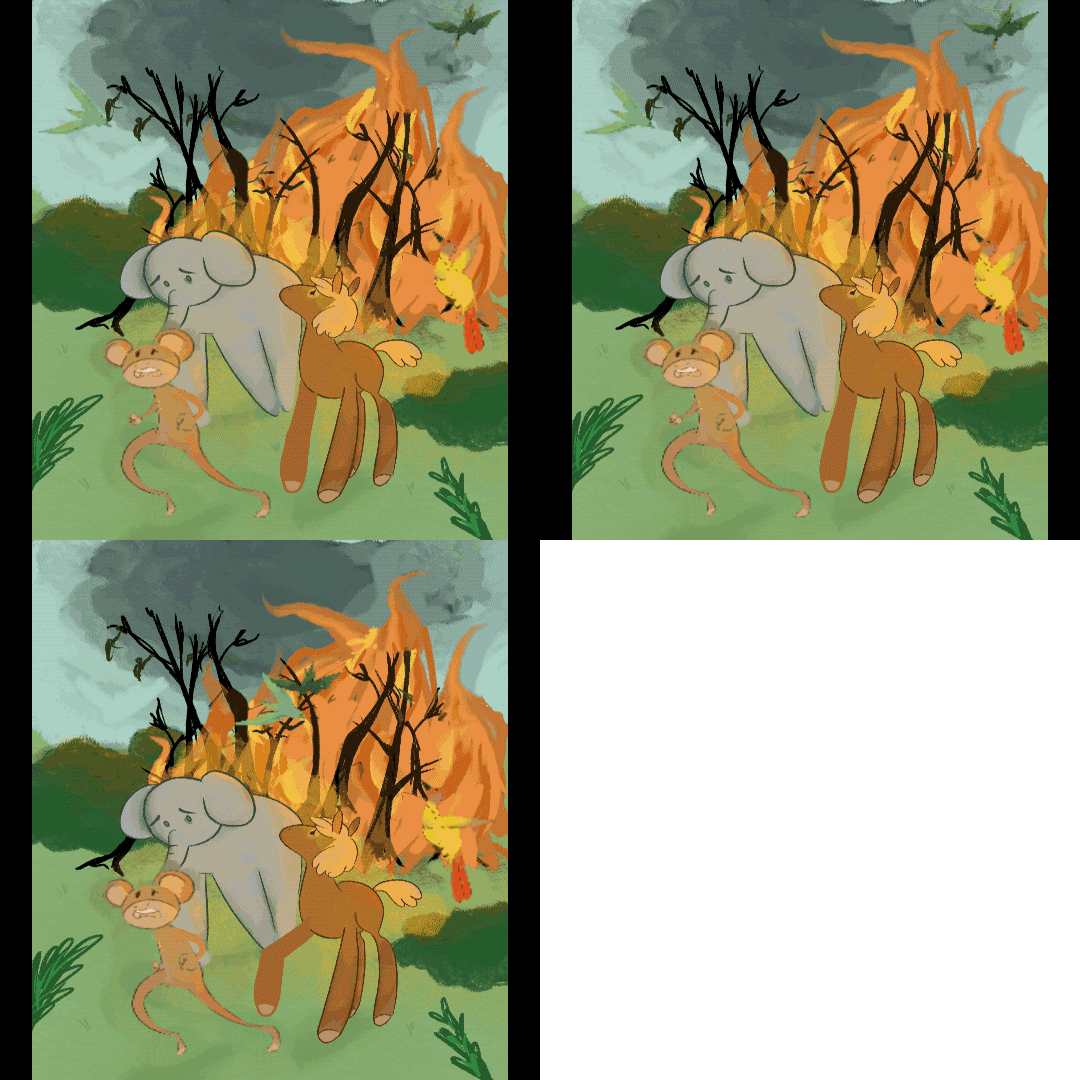
“Oh no!’ Kolibri screamed as she saw a very angry-looking fire raging through the forest as she drew close to home. As she approached the edge of the forest in the company of the other birds, she saw that all the animals were gathered watching the fire. Some were crying. Others were jumping up and down, frightened.
“My beautiful tree, my favourite place to hang, is burning!” wailed one monkey.
“Oh, what a disaster cried!” Roared a Lioness who stood looking majestic and sad.
“I can’t even look at it. I’m so scared!” Frog said. He was so frightened he could not stop making loud blup, blurp sounds.
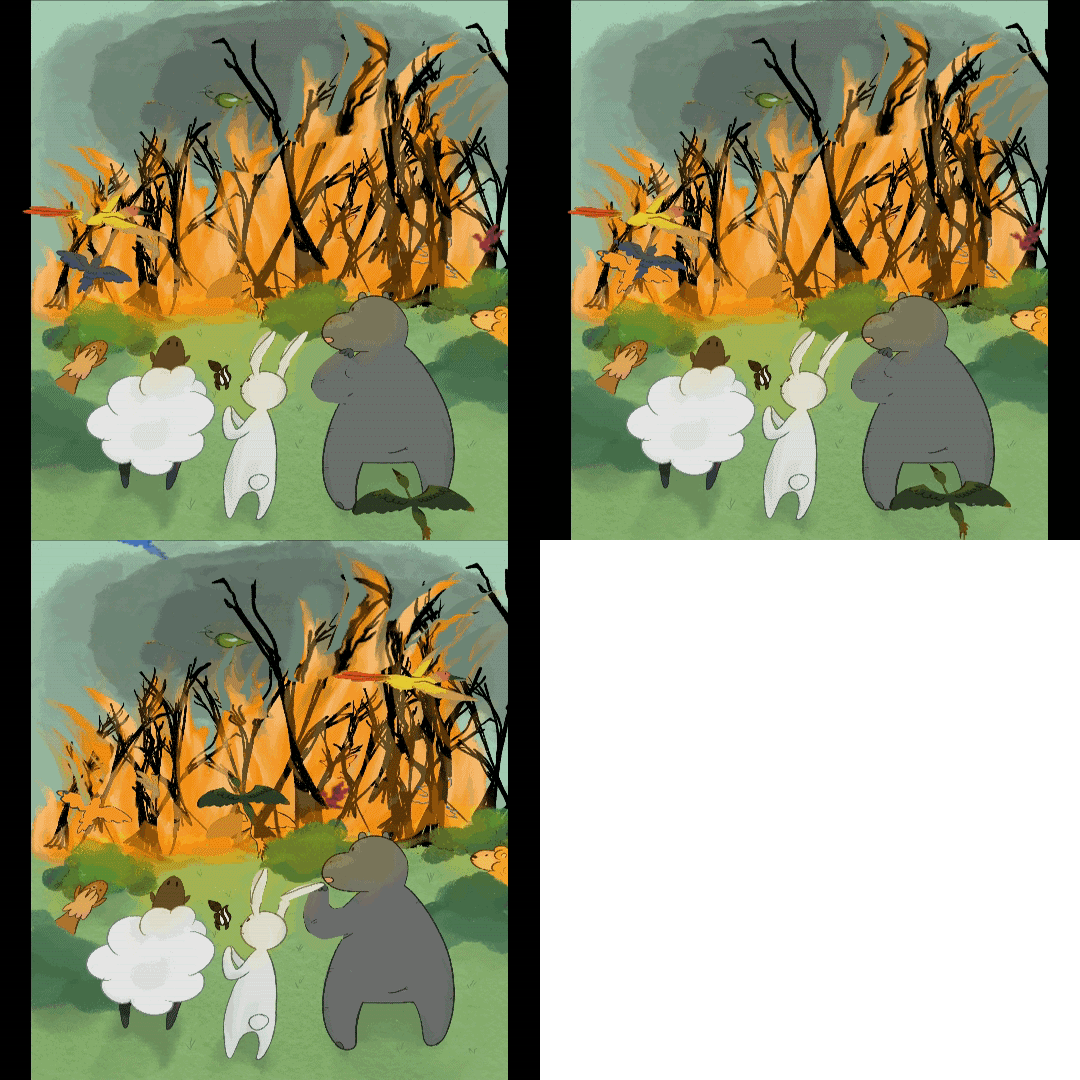
Kollibri looked down and saw that the larger animals were starting to run away. Elephants were stampeding as they tried to get away. Lions, cheetahs, jackals were all bolting. The birds who had been hovering were turning around to get as far away from the fire as they could. Without breaking her movement, Kollibri flew towards the closest stream and picked up as much water as her tiny beak could hold. She flew back towards the fire and dropped the water on it. She turned and headed back to the stream, picked up another beak full and went back to drop it on the fire.
“What on earth are you doing?” Asked the Baboon.
“I am doing what I can to put the fire out!” Kollibri shouted without stopping.
“She must have lost her mind. Poor creature,” said a jackal who was so old, he could not run and had to resort to walking as fast as he could away from the fire. He now stopped to watch Kollibri going back and forth between the stream and the fire. Each time, carrying and dropping a tiny beak full of water on the fire.
“It’s the shock of seeing the fire. She has really lost her mind.” Said Etu, the beautiful Antelope.
“But wait,” the old jackal said, still watching Kollibri.
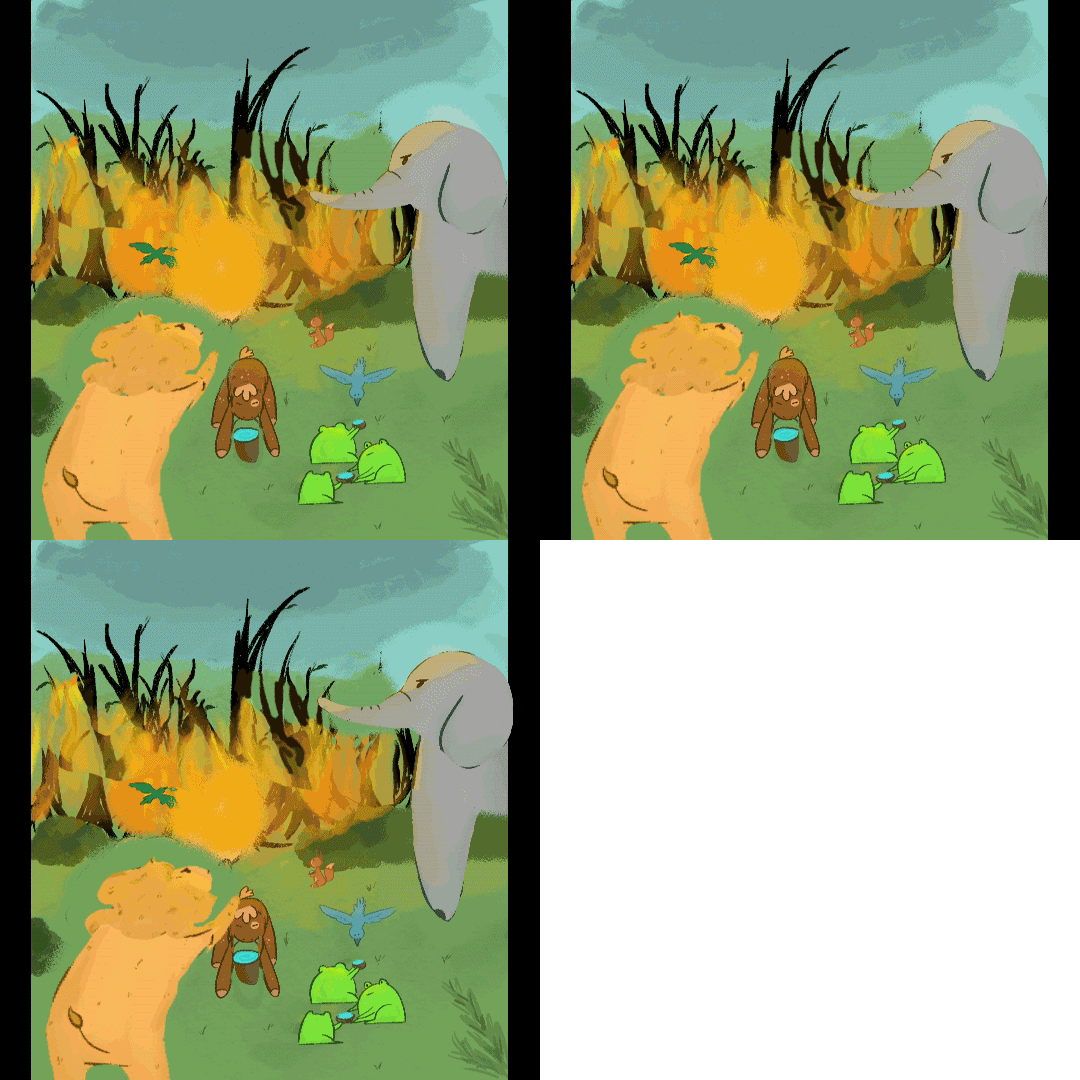
Kollibri did not stop. She kept flying backward and forward to pick up more and more drops of water. Soon the other animals noticed that with each drop of water that Kollibri dropped, the ferocious fire died a little. The other animals could see that the fire was getting weaker.
When the other animals saw what Kollibri was doing, they started joining her. Within the twinkle of an eye, some of those who had been running away ran back, and soon they were picking up water from the river and dropping on the fire. The retreating elephants turned back and picked water with their big trunks, and standing as close to the fire as they could get, they blew the water into the fire. Other animals continued to join in. They rushed to the stream and gathered whatever amount of water they could hold in their mouths. Some formed a ring around the fire and threw the water at it.
It took a long time, but because the animals did not relent, the fire’s angry hissing became less ferocious. With their collective effort, the angry fire was put out.
“Yippeeeee!” Some monkeys started screaming when the last of the fire was put out, and all the animals started celebrating.
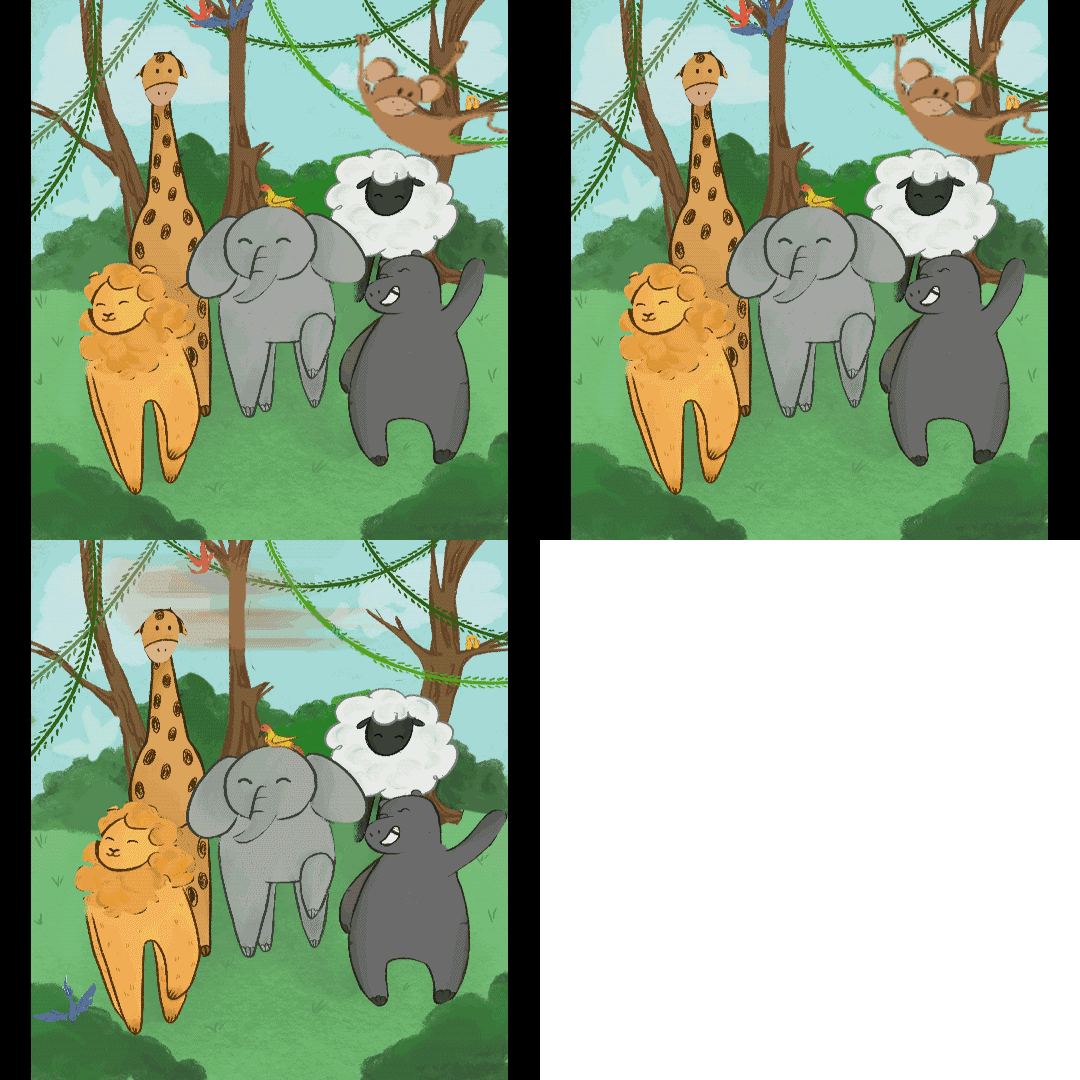
“Wow!” Said Kookaburra the laughing Jackass, going over to where Kolibri, the hummingbird, was perched. She was exhausted from her journey and all her flight back and forth to put out the fire.
“Lucky for us that you came back in time,” Kookaburra said.
“So, when can we expect rain?” Asked Baboon.
“I don’t know. Nanvula said it was not up to her.” Kolibri said.
“Not up to her?” asked Etu the Antelope incredulously.
“I knew it. I knew it! I knew there was no use trying to get her to help,” said Kookaburra, the laughing Jackass.
“Do you mean you got nothing for all your effort?” asked Peacock.
“My effort was not in vain, though. My visit with Oya and Nanvula reminded me that no effort is too small. I must always continue to do the best that I can.”
All the animals agreed. They now saw how their individual efforts worked together to become a big collective one.
“There’s something else we need to do.” Said Kolibri.
“What?” chorused most of the animals.
“We need to get humans to stop treating the forest and indeed the earth so badly,” Kolibri explained.
“But how?” Asked the Adan, the Bat who was feeling sleepy after all the hullabaloo.
“We must find a way to tell them what happened here,” said Owl.
“Yes, we must tell them this story,” agreed Kollibri and all the other animals.
The end.
Related products

Stories


Stories

