

Sinbad and the Whale


Sinbad is a brave and determined young boy. Sadly, he lost his parents when he was very young and was left with his lazy aunt and uncle who squandered all his inheritance. Determined to be successful, Sinbad joins a ship to seek his fortune. One day, the ship is hit by a storm and Sinbad is washed overboard, lost at sea. How will Sinbad survive in the middle of the ocean? Find out in this thrilling tale of survival and bravery.
Retold and Read by Bunmi Oyinsan
Illustrated Sadar Hammad Khan
Animated by Ikenna Mgbejiofor
Sinbad and the Whale
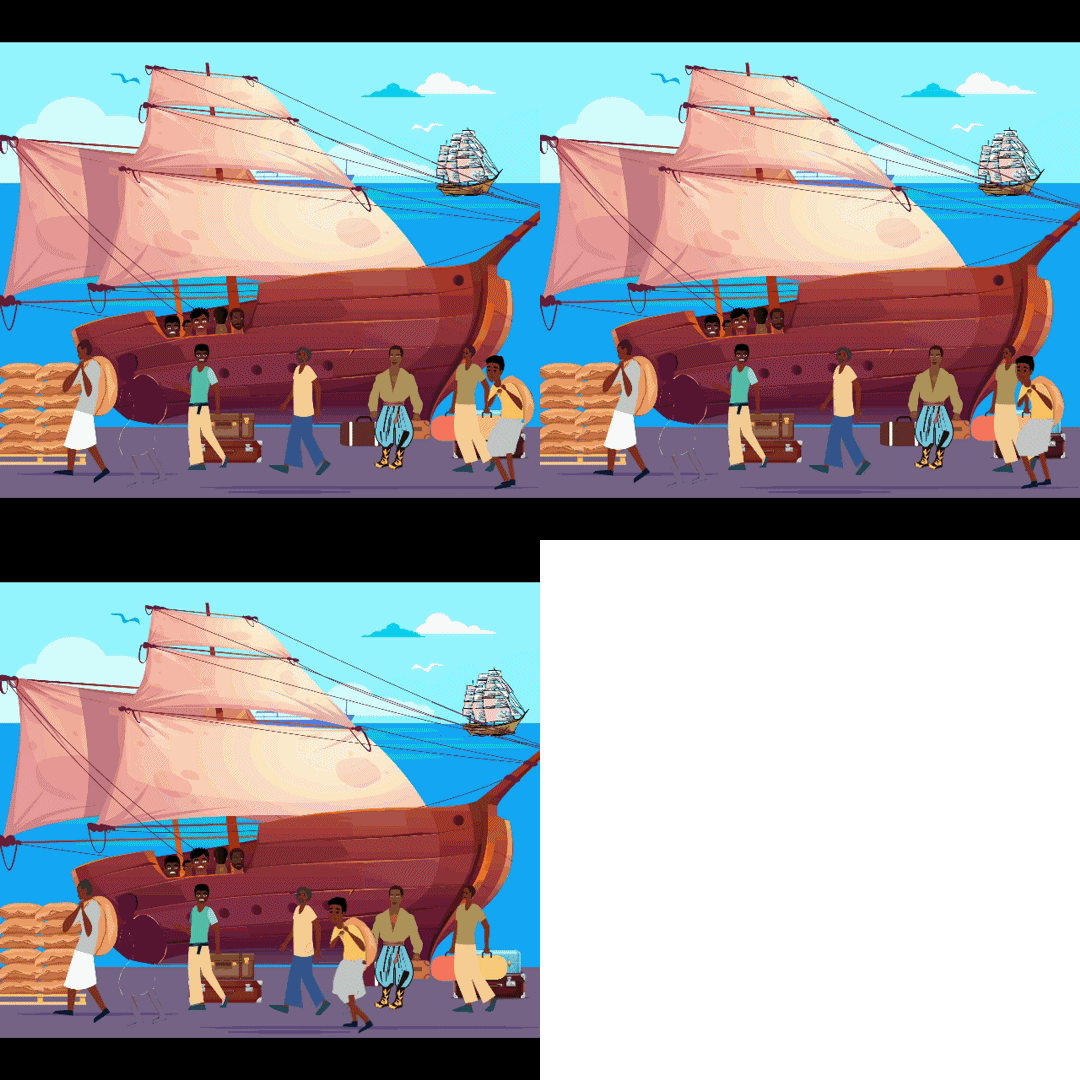
Once upon a long time ago, a boy named Sinbad lost both of his parents when he was seven years old. He was an only child, but his parents had been wealthy. After his parents died, Sinbad lived with his uncle and auntie. They were also in charge of all the money and other inheritance that Sinbad’s parents left for him. Sinbad’s uncle and auntie were not hard-working people, and they squandered all the wealth his parents left him. By the time Sinbad was eighteen years old, his uncle and auntie were so broke that they could no longer send him to university for further education or even set him up in a trade. When Sinbad confronted them, all they could do was apologize.
They agreed to sell the house and few other properties left from Sinbad’s inheritance, and they gave the proceeds to him. The money was not enough to start a trade, so Sinbad decided to travel to other parts of the world to try and make a way for himself. He was a bright young man, and he knew the value of hard work. He believed that he would make something out of his life if he worked hard, unlike his uncle and auntie. With part of the money made from the sale of what was left of his inheritance, he paid for some goods that he planned to sell when he got to other lands. He also paid for passage on a ship headed from Africa to the Caribbean Islands. He was lucky to find a ship that was heading toward the Caribbean. He had always wanted to visit places like Antigua and Barbuda, Bahamas, Barbados, Belize, Grenada, Guyana, Haiti, Jamaica, St. Kitts and Nevis, St. Lucia and other beautiful places in the Caribbean.
The ship sailed for many days and nights on the Atlantic Ocean, stopping at one beautiful island after another.
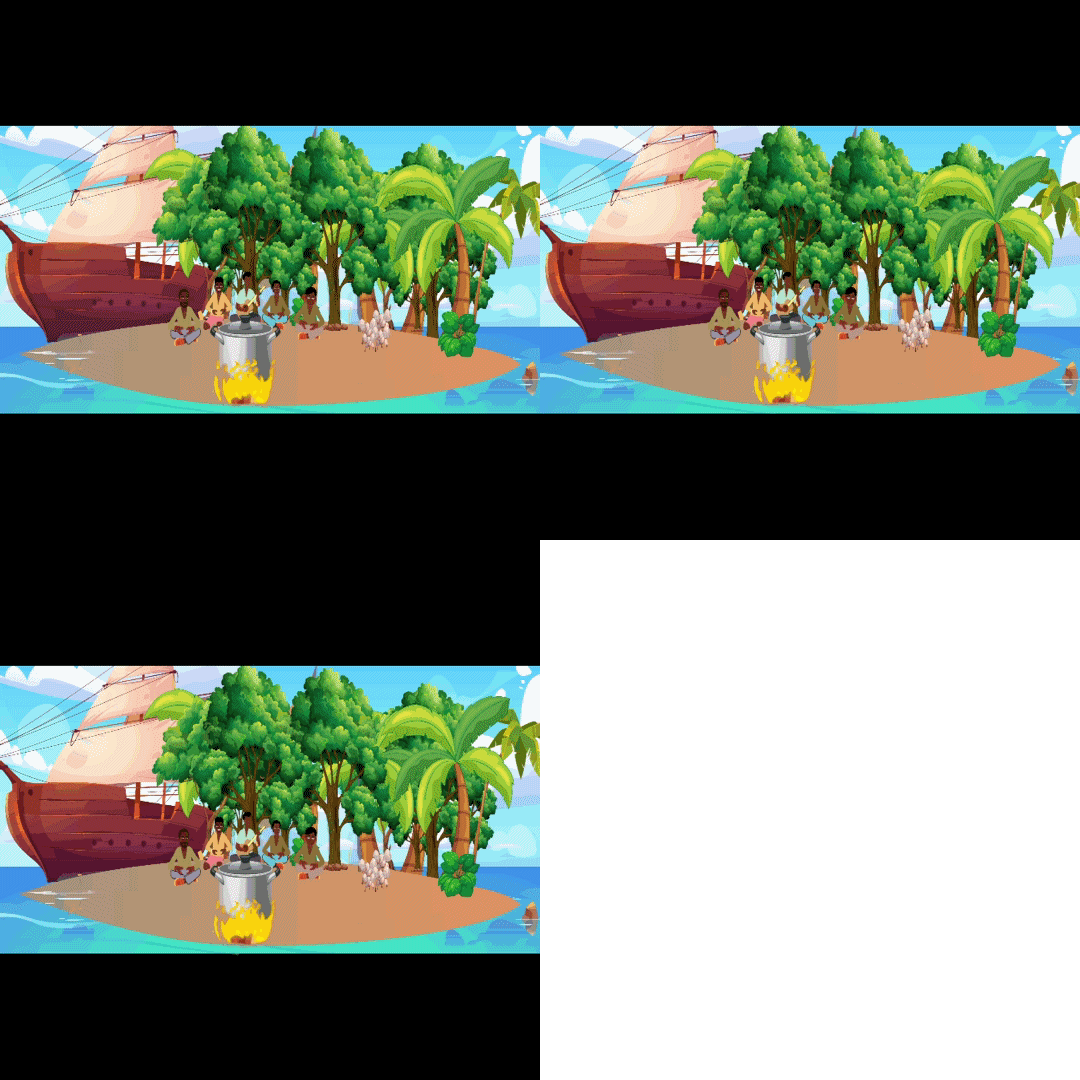
When they got to the first island, Sinbad sold the goods he had brought with him. He then bought other goods that he would sell in other ports that the ship would visit. Everywhere the ship docked, Sinbad sold and bought goods. Unfortunately, one stormy night, after three weeks of sailing, the ship ran into a very mighty wind, making the captain lose his course. Luckily by morning, the sea was calmer. The ship with Sinbad and the other people on board kept sailing for many hours, hoping they would soon get to a familiar port. Although the captain was still unsure of where they were, he sighted a small island a few nautical miles ahead of them close to the end of that day. When the ship got close to it, the island looked different from all the other islands that the ship had visited.
The island looked like a floating garden. All the sailors on board were happy to anchor there, clean up the ship and maybe wash their clothes. They were also hopeful that they would replenish their provisions and ask for directions to the next port.
The ship cast its anchor, and most of the people aboard landed. The first thing they noticed was that the island was deserted. They were, however, still grateful to find themselves on dry land after the rough night and day that they had gone through.
They set about lighting up fires to cook up some of the food they still had on the ship. They offloaded the large pots that they used on the ship and the ship’s cooks set about preparing enough food for all the sailors. Some of them found a stream very close to the beach. When they came back to tell others, people who needed to do their laundry went to the beautiful stream. Others decided to go for a swim in the stream discovered nearby. Sinbad was one of those who went to the stream. He could not imagine why this beautiful island was deserted.
“This must be very close to what paradise looks like,” Sinbad said to a young sailor who was washing clothes near where Sinbad was taking a bath.
After most of the sailors had eaten. One of them started playing the guitar. The night was so well lit by the moon and stars that soon, they were singing and dancing along to the guitar player’s melodious tunes.
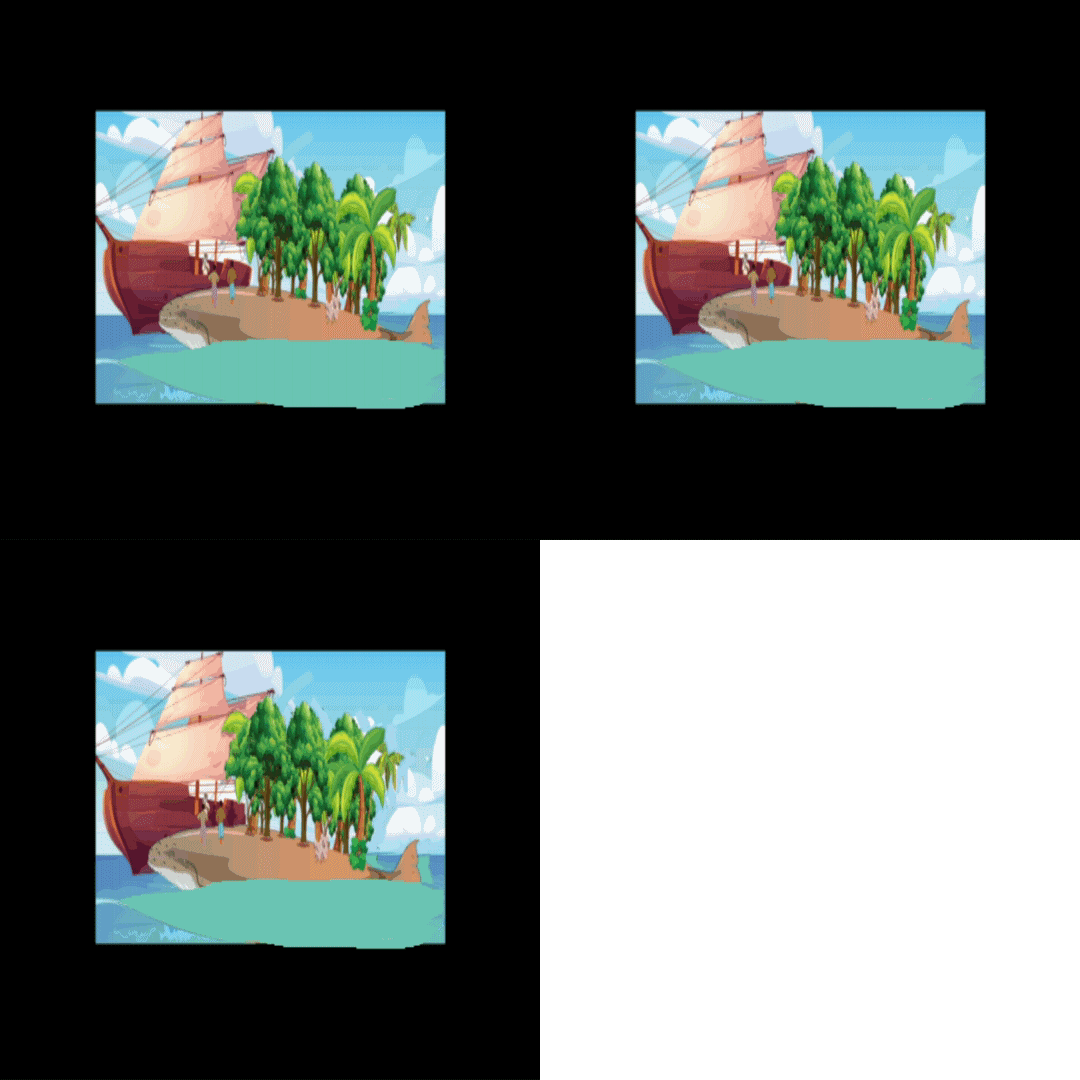
Suddenly, the captain who had returned to the ship sounded the foghorn. At first, the sailors thought the captain sounded it to add to the merriment. A foghorn is normally used to warn ships of a navigational hazard or danger. The sailors believed that the island was so isolated and so far from anything else that they did not expect that they were in any danger. So they continued singing and dancing. When the captain saw that they were not paying attention, he started shouting and gesturing to them.
‘Get back onto the ship right now, or you’ll all perish! That’s not an island. Hurry, get off it! Save yourselves! Get back to the ship. You’re on a large fish and not an Island. It’s sleeping now, but you’ll all sink and perish if it wakes up. Hurrrrrryyyy!!!!” The captain screamed as the men started scrambling to get off the mighty fish they had assumed was an Island.
“The fish must have been in a deep sleep for a long time, but now the fires that we lit and the noise of the singing and dancing must have woken it up. I can see its tail stirring from up here. Hurry up, save yourselves!” The captain was almost hoarse from screaming as he watched them going helter-skelter. Some started screaming when they felt the big fish heave making the island move. Some jumped into the sea when they saw the part of the island that was the fish’s head sink deep into the sea while the middle part bobbled high, so high that those who were on that part of the fish screamed in great terror as they were sent flying into the sea.
Sinbad was one of those who were thrown first almost sky-high before falling so fast into the deep sea.
Sinbad felt himself being tossed up and down by huge waves when he hit the sea. He tried to swim against the waves to get to the ship but was overpowered. He was petrified that his life was coming to an end as he kept being sucked further and further into the bottomless sea. Using the little strength left in him, he raised his arms and struggled to push himself high upward with the next wave. To his surprise, his right hand landed on a wide round metal. He grabbed hold of it with both hands when he realized that it was one of the large aluminum tureens from the ship that the cooks had taken to the island to wash. They had been using it to cook on just a few minutes before.
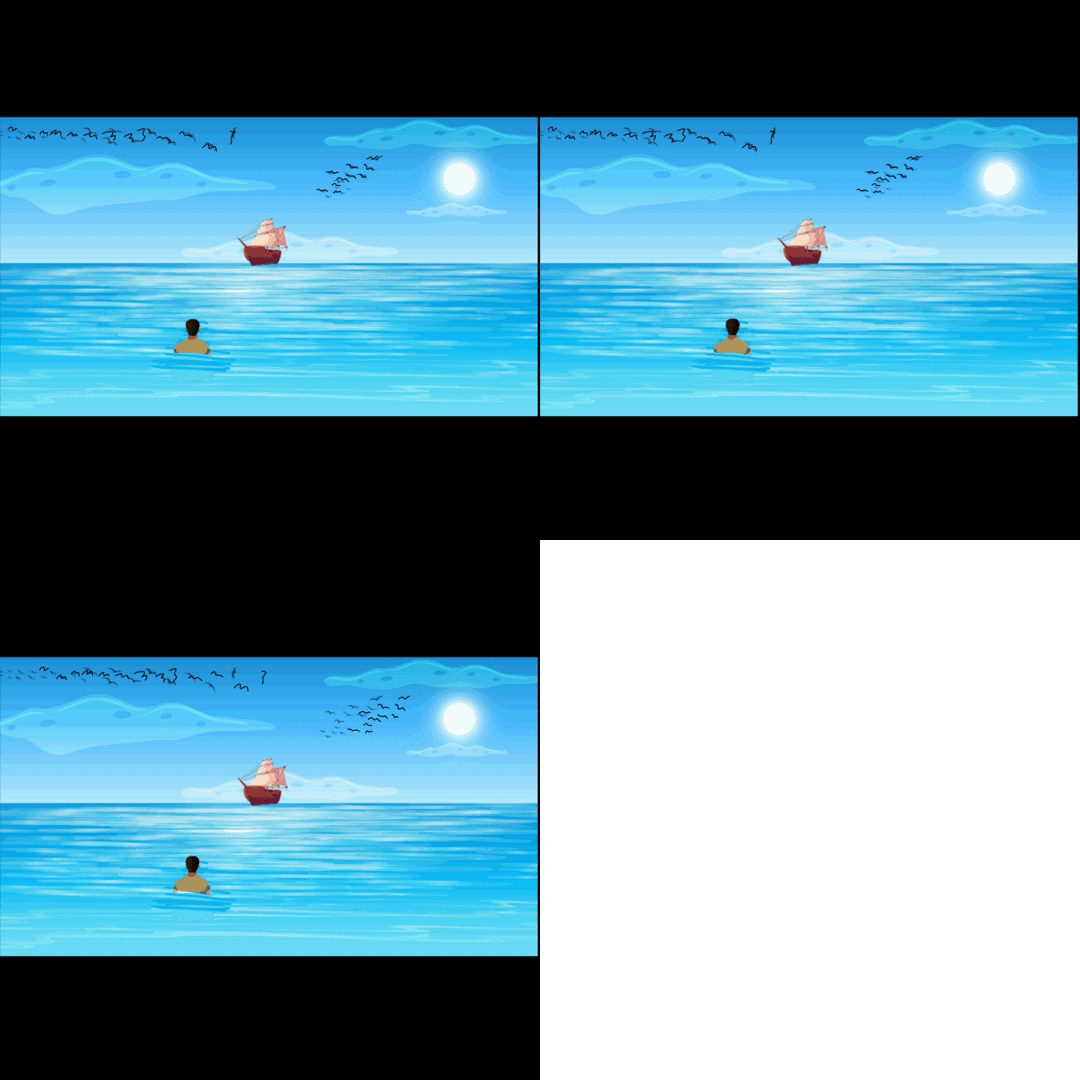
He held onto the giant pot that was big enough to hold him. He managed to steer himself into the pot and began to use his arms as oars to paddle it. He was just beginning to sigh in relief because he thought he could paddle his way to the ship when he saw that the ship was already sailing away. His heart sank when he realized that the captain and the others who managed to get on board must have assumed he had drowned. He tried to wave one arm after the other while he kept one working to keep the tureen afloat. It was no use screaming. The ship was too far away for anyone to hear or see him. He wondered if there were others like him who were still alive but, like him, were now stranded at sea and doomed to perish.
Sinbad looked all around him to see if they were other survivors. His heart sank deeper into his chest when he could not see any other human being. He was, however, not going to give up so easily. He kept paddling with his hands. He paddled and paddled, trying to keep in one direction. After several hours, he was so exhausted that his arms were almost completely stiff. He could no longer move them. His eyes kept clouding over as he kept trying to keep awake. He finally gave in to the fatigue. His mind, body and soul drifted into a deep sleep. Hours later, perhaps even a day later, when he opened his eyes, he was struck by how bright and calm everything around him looked. He looked and noticed that birds were circling around him in the sky. This gave him hope that he was close to land. He looked east or what he assumed would be east. He looked to his right, then looked to his left, where he now saw what looked like land not too far away from where he was. The possibility that he was close to landfilled him with hope and renewed his strength.
He started paddling toward the land. As he got closer, he saw that the place looked a little rocky. So he waded until he got close to a craggy-looking rock that had some plants growing out of it. He paddled himself closer to the rock and grabbed hold of what looked like the branch of a tree with roots stuck deep inside the rock. Gently, so as not to break the branch, Sinbad held it with both hands and then hoisted himself onto the fragile-looking tree and began to climb slowly up the rock. At first, he was reluctant to let go of the pot, which had been his home for several hours, but he knew he could not survive just floating aimlessly at sea. So slowly, he continued to climb till he got to the top of the rock. He was glad to see that it was actually solid land. He hurled himself till he was comfortably on top of the rock.
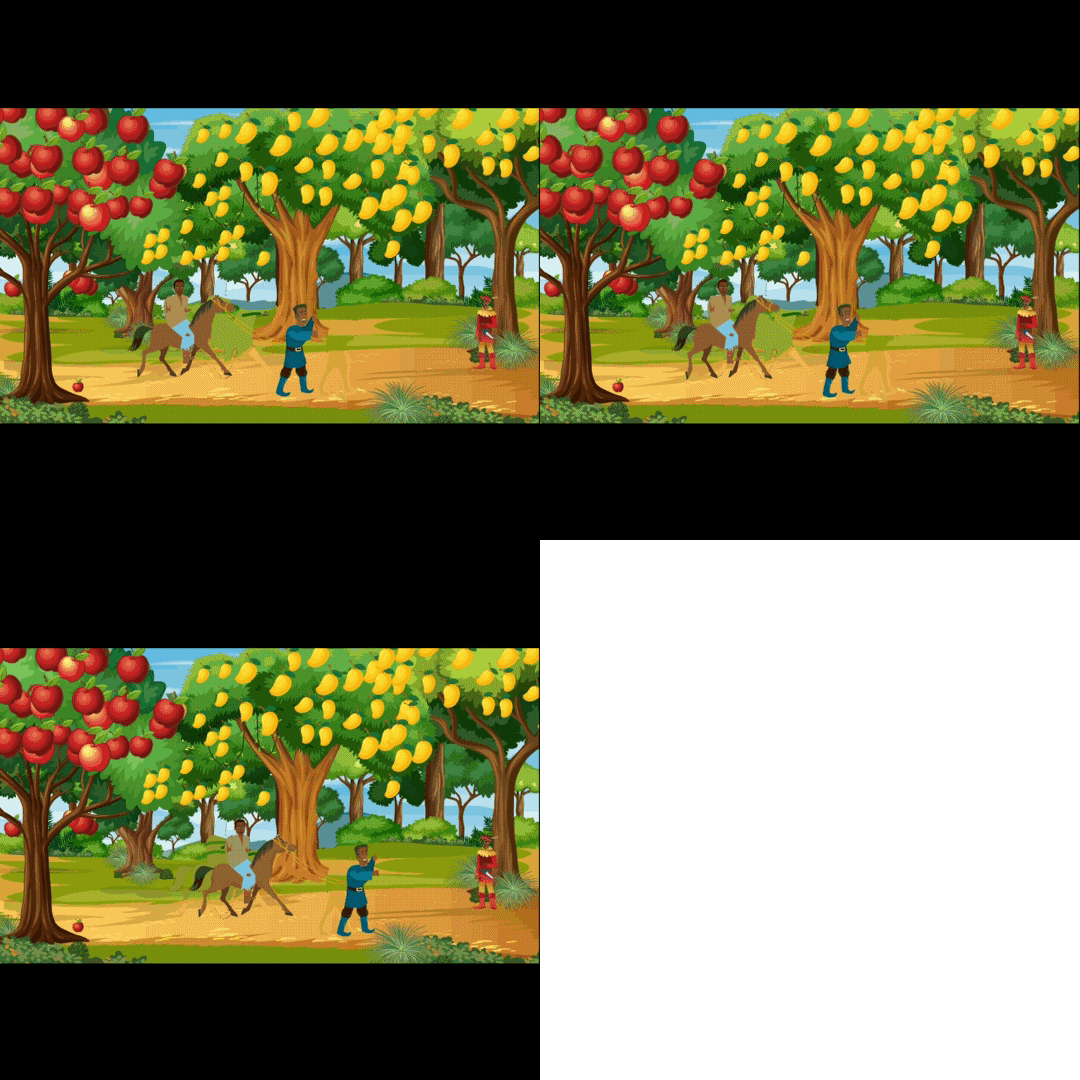
From where he stood, he saw that they were trees that looked familiar. Staggering because of exhaustion Sinbad walked towards one of the trees and saw some low-hanging mangoes on it. Next to it was another one that looked like an Indian almond tree. All around him were trees that looked rich with low-hanging fruits. They looked edible, so he plucked a mango, some guavas, and every variety of fruit that he recognized and sat down underneath one of the large leafy trees and feasted on his bountiful harvest of fruits.
The fruits were fleshy and juicy enough not just to fill him but to also quench his thirst. Still tired from the rough time he spent at sea, he used dried leaves to form a mat to sleep on for the night.
That was how he spent his first night on that island after his harrowing experience at sea. The following morning, he got up, gathered as many fruits as would go into his pockets and began to walk. Soon he saw smoke rise far away on the horizon. He started walking towards what he assumed would be some kind of village or town.
After walking for several hours, he came to a clearing. As he began to gradually make his way forward, he thought he heard the sound of an animal. Worried that it might be a wild animal, he paused, listened carefully, then thought the animal sounded like a horse. So, he continued to walk towards where the sound was coming from and then he saw a horse tethered to a palm tree. He was pretty sure there had to be someone close by because the horse was tied to a tree. As he was still looking around, trying to see if the owner of the horse was anywhere nearby, he heard a voice from behind him.
“Stop! whoever you are.” A voice said.
Sinbad was going to turn to see who was talking when the voice instructed him not to turn around.
“Just stand where you are.” Sinbad heard the voice move swiftly towards him.
“Who are you?” The voice asked.
“My name is Sinbad. I’m a sailor. I got lost at sea.” Sinbad said in a voice that he hoped would convince the man that he was harmless. The man then walked around him then turned to face him. He looked Sinbad over from head to toe. He noticed how rough his clothes looked. He even noticed that Sinbad had scratches on his legs and feet from where tiny fishes had nibbled at him while sleeping in the tureen at sea.
“So, did you fall off your ship? How did you lose your ship?” The man asked. Sinbad was only too glad to explain how he had found himself in that part of the world. The man allowed him to ride on his horse while he walked beside Sinbad. He was taking him a few miles inland where the man’s other partners were waiting. Before they got to his partners, the man, whose name was Ebere, told Sinbad that he and seven others had been sent by their King to bring horses to that part of the island where ancient myths said there were
plenty of seahorses. The men had brought the horses, hoping that their horses would mate with the seahorses. Ebere’s King wanted to create super horses that could run fast, swim and have the ability to live on land and sea.
When Sinbad heard this, he had to restrain himself from laughing aloud.
“Has anybody from your country ever really seen a seahorse?” Sinbad asked.
“No,” Ebere replied, “but we’ve heard many stories about seahorses, and our King wants to have a super special species.”
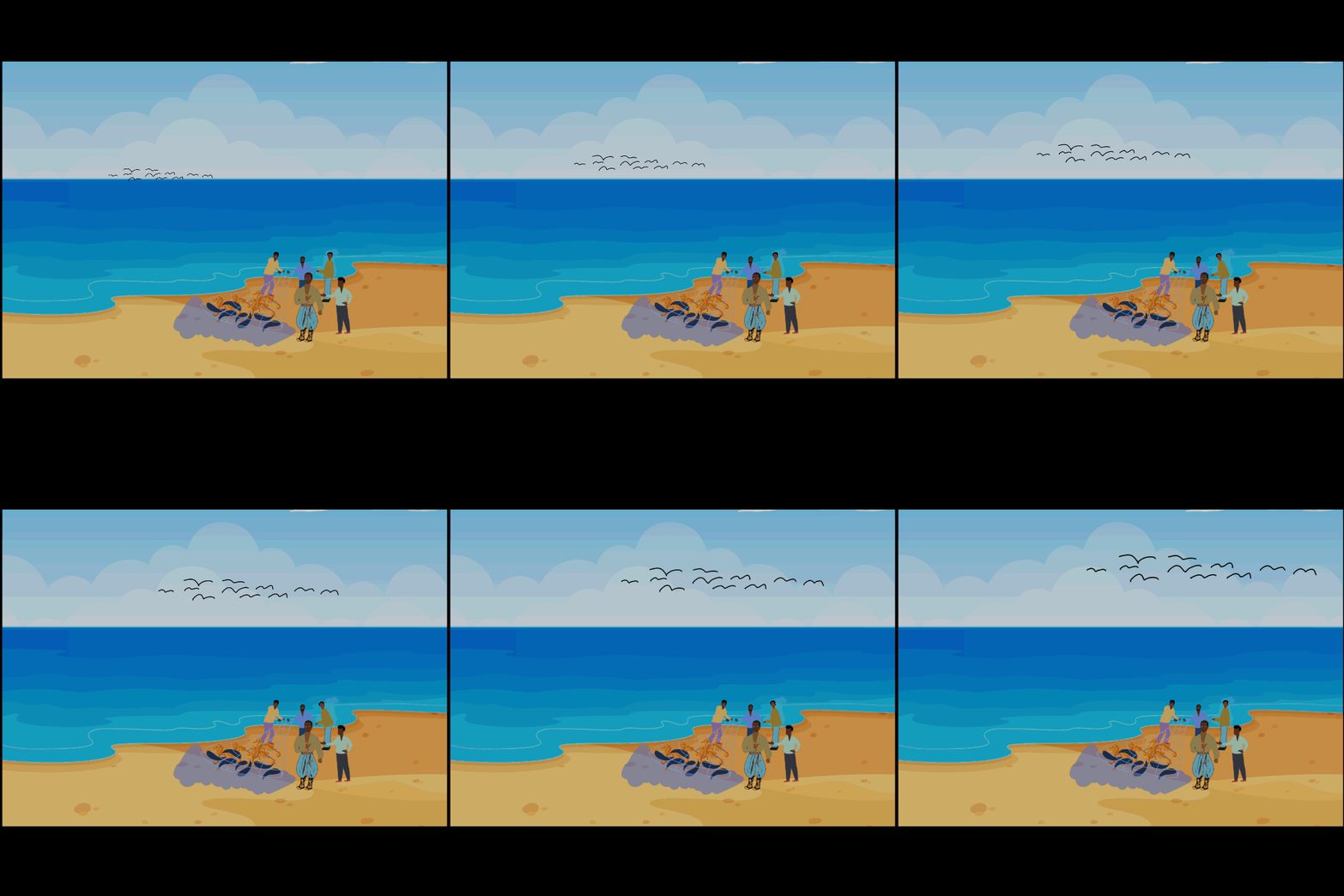
“Well, I am sorry to disappoint you, but sea horses are not horses at all. As a matter of fact, sea horses are very tiny fishes. They’re just called seahorses because of the way they are shaped. There’s nothing about them that can link them to horses. And you can’t breed a cross between real horses and seahorses.”
It took Sinbad a while to convince Ebere and his colleagues when they met up with them that what he was saying was the truth. So he challenged them to cast their nets into the sea. He hoped that they would catch some seahorses since it was rumoured that there were seahorses around the area where they were.
Luckily Sinbad’s instinct was right. When the nets were brought out from the sea, there were different fishes, and Sinbad recognized that some were sea horses. He took out one of the seahorses, placed it on the sandy beach and then pointed out its anatomy, which surprised Ebere and his colleagues when they recognized the similarity between the seahorse and the shape of their horse. Thankfully, Ebere and his cohorts were good-spirited enough to acknowledge how silly they had been to assume that seahorses were anything like real horses. So they all headed back to their country’s capital, taking Sinbad with them. They wanted him to explain to their King that his wish to create a super breed of horses was not achievable.
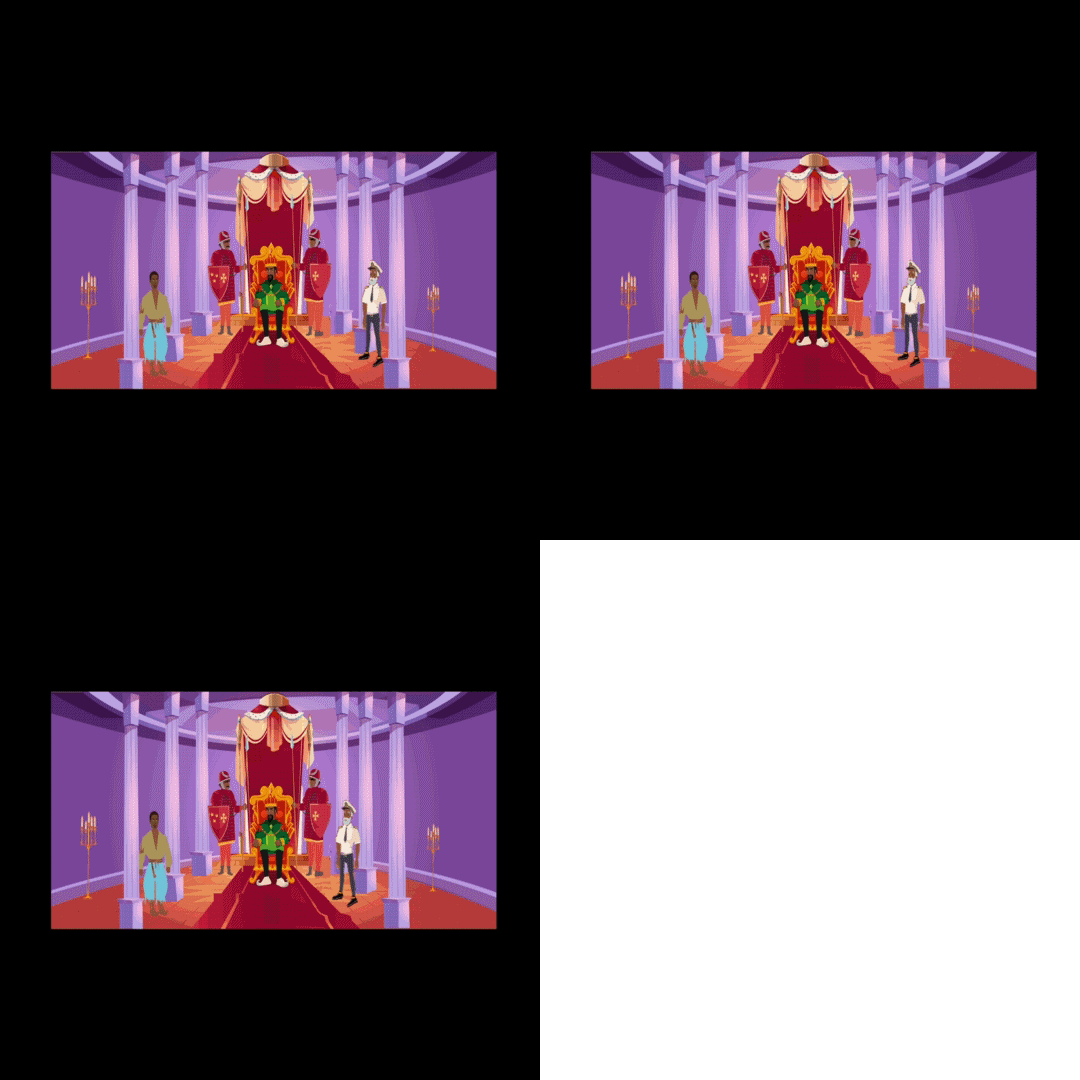
At first, the King thought his men were lying until they showed him the seahorse. The King was very impressed that Sinbad knew the difference between a seahorse and a regular horse. This made him believe that Sinbad must be a sage, a wise person, so he asked him a few random questions to test him. He was so impressed with Sinbad’s knowledge that he offered him a high position in his court.
Although Sinbad was grateful and accepted the King’s kind offer, he never lost sight of his ambition to become like his parents. He wanted to be a hard-working and successful merchant. His mind was also still set on visiting the Caribbean Islands because he had heard many wonderful stories about that most beautiful part of the world.
Sinbad remained hard-working and diligent. He also continued to save every penny he earned from the King because he was determined to continue his voyage to the Caribbean before going back to his country. Several months after he had been living in the King’s court, a ship arrived at the port.
The tradition in that country was that whenever ships arrived at the port of this country, the captain would come and pay homage to the King and bring him gifts. Sinbad was attending to the King one day when one of the security men at the palace came and informed the King that the captain of a ship that just arrived wanted to pay him a visit. The King gave his permission for the captain to come in. He also instructed Sinbad to arrange for refreshments for the sailor, and so when the captain first came into the King’s presence, Sinbad was not there. When Sinbad joined the King and his guest, the captain was facing the King, so his back was turned to the entrance through which Sinbad came in. However, the voice of the sailor who was addressing the King sounded very familiar to Sinbad. Sinbad became excited. He recognized the sailor’s voice because he was the captain of Sinbad’s ship.
He embraced the captain, who was bewildered because he could not immediately see Sinbad’s face. The King watched the two men in amazement.
“It looks as if you two are old friends.” The King said. ”
“Yes indeed,” replied Sinbad’s captain when he recognized Sinbad.
“You do not know how glad I am to find this young man that we had all given up for dead.” The captain then told the King how they had lost Sinbad.
The King was even more impressed with the story that the captain told. He was impressed because Sinbad’s account of how he found himself on this island was precisely how his captain described it. This proved to the King that Sinbad was indeed a trustworthy person, a man of great honour. He had the opportunity to make up fantastic stories about how he got lost but chose to speak the truth. Sinbad’s captain gave him an even bigger surprise when he told him that the goods that he had left on the ship had been sold and all the earnings from the sale had been kept by the captain in the hope that when they got back to Sinbad’s country, he would try and trace Sinbad’s family to give them the proceeds. Sinbad thanked his lucky stars that he ran into his captain because he knew if the money had been given to his uncle and his auntie, who were his only surviving relatives, they would have squandered it just as they wasted all the inheritance that his parents left him.
Related products


Stories


Stories
